
How Phones and Screens Affect Sleep: Blue Light, Doomscrolling and a 7-Night Fix
By WellnessVigor · Updated October 15, 2026 · 8 min read
This article contains affiliate links. If you buy through them, we may earn a small commission at no extra cost to you. Learn more.
You plan to sleep at 11. You check one message, open one video, and suddenly it is past midnight. Sound familiar? Phones, tablets, laptops and TVs are now the last thing most of us look at before bed, and for many people they are quietly stealing sleep.
Here is how screens affect your sleep, what the research really says about blue light, the phone settings that actually help, and a simple 7-night plan to fix the habit.
Quick answer
Screens affect sleep in three ways: bright, blue-rich light delays your body clock and lowers melatonin; exciting content keeps your brain alert; and “one more video” pushes bedtime later. Blue-light glasses and night mode help a little, but the biggest win is a screen-free last hour and keeping your phone out of the bedroom.
Table of Contents
Toggle3 ways screens keep you awake
- Light. Screens give off blue-rich light, which your brain reads as daytime. In a Harvard study, people who read on a light-emitting device before bed took longer to fall asleep, made less melatonin, had a later body clock and felt less alert the next morning than when they read a printed book.
- Stimulation. News, games, social media and work emails raise alertness and emotions. A national study of US young adults found that checking social media in the 30 minutes before bed was linked with more disturbed sleep.
- Lost time. Feeds and autoplay are designed to keep you watching. Researchers call the result bedtime procrastination: going to bed later than you meant to, with no real reason. It is strongly linked with problematic phone use and poor sleep.
A fourth, often missed problem is notifications. A buzz or light during the night can pull you into lighter sleep, even if you do not fully wake up.
Do blue-light glasses and night mode work?
The evidence is mixed. A 2021 review of 24 studies on sleep found that amber blue-blocking glasses worn in the evening helped people fall asleep faster, especially people with insomnia, a delayed body clock, jet lag or shift work. But a 2023 Cochrane review of blue-light filtering lenses found the evidence for better sleep quality was very uncertain, with some trials showing a benefit and others showing none.
Night mode and warm screen filters reduce blue light but do not remove the biggest problems: brightness, stimulating content and lost time. Think of glasses and night mode as helpful extras, not a fix on their own.
Phone settings that actually help
- iPhone: set a Sleep Focus and Downtime under Screen Time so apps and notifications go quiet an hour before bed. Turn on Night Shift and lower brightness in the evening.
- Android: use Bedtime mode in Digital Wellbeing. It can silence notifications, switch the screen to grayscale and dim the display at a set time.
- Turn off autoplay in video and social apps so the next clip does not start on its own.
- Move tempting apps off your home screen, or set daily app limits.
- Grayscale mode makes your phone far less attractive at night.
Want a simple, step-by-step plan to sleep better? The 14-Day Sleep Reset guide walks you through fixing your schedule, evening routine and bedroom, one day at a time.
Wind down after a stressful day
Ashwagandha (KSM-66) is one of the most popular supplements for stress. In small studies it modestly lowered stress and improved sleep quality for some people.
Good to know: Not suitable in pregnancy or with thyroid or autoimmune conditions. Rare liver problems have been reported. Check with your doctor if you take medicines.

A simple 7-night plan to take back your evenings
Change one thing each night and keep the earlier changes going:
| Night | What to do |
|---|---|
| 1 | Set a fixed bedtime and an alarm 60 minutes before it as your screen curfew. |
| 2 | Turn on Sleep Focus or Bedtime mode so notifications stop at the curfew. |
| 3 | Charge your phone outside the bedroom and use a simple alarm clock. |
| 4 | Swap scrolling for a paper book, e-ink reader, stretching or a warm shower. |
| 5 | Dim the lights in your home after the curfew; use lamps instead of ceiling lights. |
| 6 | Write tomorrow’s to-do list before the curfew so your mind can switch off. |
| 7 | Review the week: keep what worked and pick one habit to make permanent. |
Most people notice they fall asleep earlier within the first week. For more ideas, see how to reduce screen time before bed.
Useful tools for a screen-free bedtime
These are common, inexpensive options that some people find helpful. We have not personally tested these products. Links go to Amazon so you can check current prices and reviews.
BEST FOR EVENING SCREEN USE
Amber Blue-Light Blocking Glasses
Amber lenses filter most blue light. Wear them for the last 1 to 2 hours before bed if you cannot avoid screens completely.
Pros
- Amber tint blocks most blue light
- Comfortable frame for long wear
- Useful for shift workers
Cons
- Changes how colors look
- Evidence for sleep quality is mixed

BEST SCREEN SWAP FOR NIGHT READING
Amazon Kindle Paperwhite
An e-ink screen with an adjustable warm light is much gentler than a phone or tablet, and it does not have endless feeds or notifications.
Pros
- Warm, adjustable front light
- No social media or alerts
- Weeks of battery life
Cons
- Higher upfront cost
- Still a light source; keep it dim

BEST WAY TO KEEP YOUR PHONE OUT OF THE BEDROOM
Peakeep Battery Analog Alarm Clock
A quiet, simple alarm clock means you do not need your phone by the bed at all.
Pros
- Silent, non-ticking movement
- Battery powered
- Small and inexpensive
Cons
- No backlight on some models
- Single alarm

BEST FOR WILLPOWER BACKUP
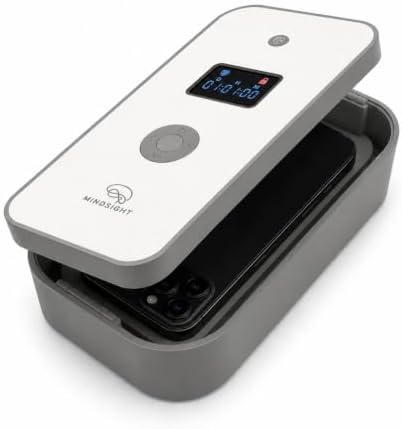
Mindsight Personal Timed Lock Box
Lock your phone away for a set time so the late-night scroll simply is not an option.
Pros
- Simple timer
- Fits most phones
- Good for building a new habit
Cons
- Not for people who need to be reachable at night
What about TV in the bedroom?
Falling asleep with the TV on combines bright, changing light with sound and content that keeps your brain engaged. If you need background sound, a white noise machine or a sleep timer is a better choice. Read is it bad to sleep with the TV on?
Keep reading
Frequently asked questions
How long before bed should I stop using screens?
Aim for 60 minutes. Even 30 minutes helps if an hour feels too hard at first.
Is night mode enough to protect sleep?
It reduces blue light, but brightness, exciting content and lost time still affect sleep. Combine it with a screen curfew.
Do blue-light glasses help you sleep?
They may help some people fall asleep faster, particularly people with insomnia or a late body clock, but the overall evidence is mixed.
Is reading on a Kindle better than a phone?
Yes. E-ink readers give off far less light and have no feeds or notifications. Keep the light warm and dim.
Sources
- Chang AM, et al. Evening use of light-emitting eReaders negatively affects sleep, circadian timing, and next-morning alertness. PNAS. 2015.
- Levenson JC, et al. Social media use before bed and sleep disturbance among young adults in the United States. Sleep. 2017.
- Correa-Iriarte S, et al. Relationship between problematic smartphone use, sleep quality and bedtime procrastination. Behav Sci. 2023.
- Hester L, et al. Evening wear of blue-blocking glasses for sleep and mood disorders: a systematic review. Chronobiol Int. 2021.
- Singh S, et al. Blue-light filtering spectacle lenses for visual performance, sleep, and macular health in adults. Cochrane Database Syst Rev. 2023.
This article is for general information only and is not medical advice. See our Medical Disclaimer.