
How to Lose Weight If You Sit 8–10 Hours a Day
By WellnessVigor · Updated October 15, 2026 · 9 min read
This article contains affiliate links. If you buy through them, we may earn a small commission at no extra cost to you. Learn more.
If you sit 8–10 hours a day, you are not alone. Office work, studying, driving and screens fill most of the waking day for millions of people. Sitting this much makes weight gain easier, but it does not make weight loss impossible.
The key idea is simple: you cannot always sit less, but you can sit in shorter pieces and add movement around the edges. This guide shows you how, hour by hour.
Quick answer
Break up sitting every 30–60 minutes with 2–5 minutes of walking or light exercise, aim for about 7,000–10,000 steps a day, walk 10–15 minutes after your biggest meals, eat protein at every meal, and add 2–3 short strength sessions a week. About an hour of moderate activity spread through the day appears to offset most of the health risk of long sitting.
Table of Contents
ToggleWhat sitting does to your metabolism
When you sit for hours, your large leg and hip muscles are almost switched off. That has a few effects:
- Fewer calories burned. Lean people in one study stood and moved around about 2 hours more per day than people with obesity — worth roughly 350 calories a day.
- Bigger blood sugar spikes after meals. Breaking up sitting with short walks lowers glucose and insulin after eating compared with sitting straight through.
- Higher long-term risk — but this can be offset. In data from over a million adults, sitting more than 8 hours a day was linked to higher mortality mainly in people who were also inactive. Those who did about 60–75 minutes of moderate activity a day did not show that extra risk.
Your hour-by-hour plan
- Morning: high-protein breakfast. If possible, walk part of your commute or take a 10-minute walk before work.
- Every 30–60 minutes: stand up. Walk to refill water, take a call standing, or do the 3-minute reset below.
- Lunch: eat, then walk for 10–15 minutes.
- Mid-afternoon: 3-minute reset plus a planned snack (protein + fiber).
- After work: 20–30 minutes of walking, or a 20-minute strength workout 2–3 times a week.
- After dinner: a short 10-minute walk if you can.
- Night: limit screen-time sitting; aim for 7+ hours of sleep.
The 3-minute reset (do it every hour)
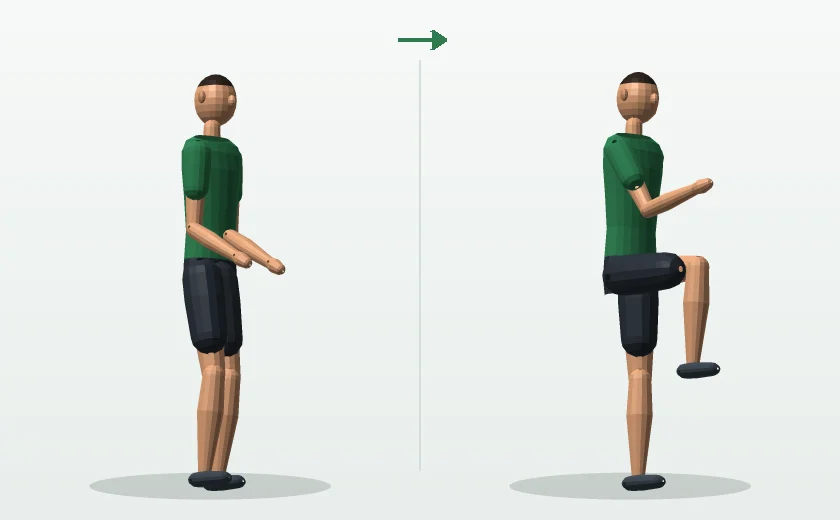
- March in place – 60 seconds
- Bodyweight squats – 10
- Calf raises – 15
- Standing side bends – 10 per side
It sounds small, but eight resets across a workday add up to 24 minutes of movement and roughly 1,500–2,500 extra steps-worth of activity.
Want a done-for-you plan? 35 Days to a Leaner You combines a 35-day low-carb meal plan with simple home workouts, so you know exactly what to eat and how to move each day.
Burn calories at home, rain or shine
A magnetic exercise bike is quiet enough for early mornings and small apartments. One purchase, years of workouts for the whole household.

Steps: how many do you really need?
A 2022 meta-analysis of 15 studies found health risk kept falling as daily steps rose, levelling off around 8,000–10,000 steps for adults under 60 and 6,000–8,000 steps for those over 60. If you are currently at 3,000–4,000, add 1,000 steps a week until you reach your target. More detail: walking for weight loss: steps per day.
Short, hard bursts count too
A 2022 study of non-exercisers found that just three 1–2 minute bursts of vigorous everyday activity per day — climbing stairs fast, walking uphill briskly, carrying heavy shopping — were linked with about 40% lower risk of early death. Taking the stairs quickly a few times a day is a real habit worth building.
Eat for a sitting day
- Protein at every meal (eggs, chicken, fish, yogurt, beans, tofu) to stay full.
- Vegetables or salad with lunch and dinner.
- Fewer liquid calories: soda, juice, sweet coffee drinks.
- Plan snacks instead of eating from a drawer.
- Eat your largest meal earlier when possible; see best time to eat dinner.
Tools that make moving easier
These are common, inexpensive options that some people find helpful. We have not personally tested these products. Links go to Amazon so you can check current prices and reviews.
BEST FOR MOVING WHILE WORKING
Under-desk walking pad
Lets you walk slowly during emails or calls. Compare models in our walking pad guide.
Pros
- Adds thousands of steps
- Quiet at slow speed
Cons
- Needs a standing desk
- Takes floor space

BEST FOR SEATED MOVEMENT
Under-desk bike pedal exerciser
A small pedal exerciser keeps your legs moving while seated. It is no replacement for walking, but it beats sitting still.
Pros
- Works under most desks
- Inexpensive
Cons
- Light effort only
- Can slide on smooth floors

BEST FOR REMINDERS
Fitness tracker with move reminders
Vibrating move reminders and a step count make it easier to break up long sitting.
Pros
- Hourly move alerts
- Step and sleep tracking
Cons
- Needs charging
- Accuracy varies

Strength training: the metabolism protector
Sitting all day tends to shrink muscle over time, especially in the legs and glutes. Two or three 20-minute strength sessions a week help keep it. Try squats, lunges, rows, push-ups and planks, or use our dumbbell exercises for fat loss at home. If you only have a few minutes, the standing exercises to burn belly fat routine works well.
Keep reading
Frequently asked questions
Can you lose weight if you sit all day?
Yes. Weight loss mainly depends on eating fewer calories than you burn. Sitting makes it a bit harder, so breaking up sitting, walking more and doing some strength training helps a lot.
How often should I get up if I sit all day?
Every 30–60 minutes is a good target. Even 2–3 minutes of light walking each time helps blood sugar and adds to your daily calorie burn.
Does exercise cancel out sitting all day?
Research suggests about 60–75 minutes of moderate activity per day can offset much of the health risk linked to sitting 8+ hours. It can be spread across the day.
Sources
- Ekelund U, et al. Does physical activity attenuate, or even eliminate, the detrimental association of sitting time with mortality? Lancet. 2016.
- Levine JA, et al. Interindividual variation in posture allocation: possible role in human obesity. Science. 2005.
- Dunstan DW, et al. Breaking up prolonged sitting reduces postprandial glucose and insulin responses. Diabetes Care. 2012.
- Paluch AE, et al. Daily steps and all-cause mortality: a meta-analysis of 15 international cohorts. Lancet Public Health. 2022.
- Stamatakis E, et al. Association of wearable device-measured vigorous intermittent lifestyle physical activity with mortality. Nat Med. 2022.
This article is for general information only and is not medical advice. See our Medical Disclaimer.