
How to Lose Weight If You Sit 10–12 Hours a Day
By WellnessVigor · Updated October 15, 2026 · 10 min read
This article contains affiliate links. If you buy through them, we may earn a small commission at no extra cost to you. Learn more.
Some people sit far more than a normal office day. Long work shifts, a long commute, studying, gaming or editing — and then the sofa in the evening. Ten to twelve hours of sitting a day is common for programmers, call-center staff, drivers, students in exam season, and many remote workers.
At this level, “just go to the gym three times a week” is not enough on its own. You need a daily movement budget, built into the hours you are already sitting.
Quick answer
Plan a daily movement budget of about 60–75 minutes, split into a morning or evening walk (20–30 min), hourly 3–5 minute breaks (30+ min total) and post-meal walks. Use seated calf raises when you cannot stand, keep evening screen time active, eat protein-first meals with fewer liquid calories, and use weekends for longer walks or activities.
Table of Contents
ToggleWhy 10–12 hours of sitting is different
A large analysis of more than one million adults found that the highest risk group was people who sat more than 8 hours a day and were also inactive. The good news: people who did roughly 60–75 minutes of moderate activity daily did not show the extra risk, even when they sat a lot. The more you sit, the more that daily dose matters.
Very long sitting also:
- Reduces daily calorie burn from everyday movement (NEAT) to almost nothing.
- Makes post-meal blood sugar spikes larger.
- Tightens hips and weakens glutes, which can lead to back pain — making you even less likely to move.
Build your 60–75 minute movement budget
You do not need one long workout. Collect it in blocks:
| Block | Time |
|---|---|
| Morning or evening brisk walk | 20–30 min |
| Hourly breaks (3–5 min × 8–10) | 30–40 min |
| Walk after lunch and dinner | 10–20 min |
| Total | 60–90 min |
The 5-minute hourly break
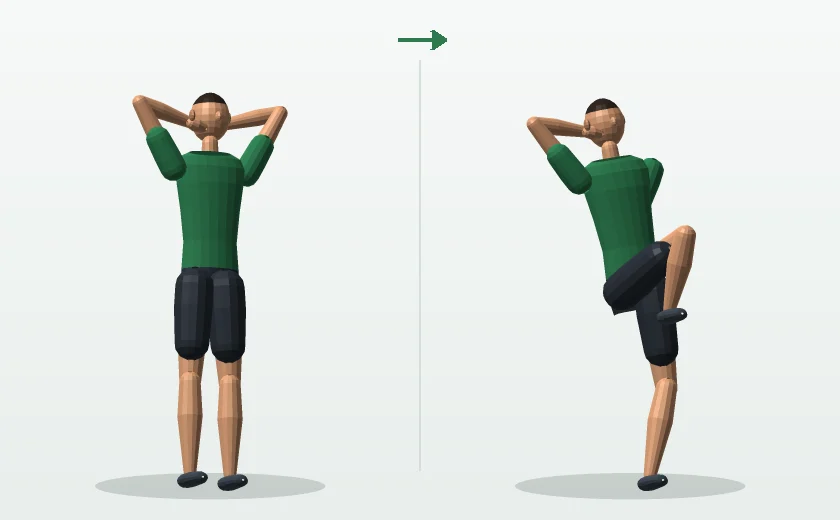
- March in place or walk – 90 seconds
- Bodyweight squats – 12
- Standing knee-to-elbow – 8 per side
- Butt kicks – 30 seconds
- Hip flexor stretch – 20 seconds per side
In trials, light walking breaks lowered blood sugar and insulin after meals more than standing breaks did. So moving matters more than just standing up.
Want a done-for-you plan? 35 Days to a Leaner You combines a 35-day low-carb meal plan with simple home workouts, so you know exactly what to eat and how to move each day.
One exercise bike, and the whole family gets fitter
Skip the gym fees and the commute. A quiet magnetic bike lets everyone at home ride while watching TV, in any weather. Twenty to thirty minutes a day adds up to real calories burned.

When you cannot leave your seat
Some jobs and long tasks do not allow hourly breaks. Use seated moves:
- Seated calf raises (soleus push-ups): heels up, toes down, steady rhythm. A 2022 study showed this simple movement can keep a small calf muscle working hard for hours and cut the blood sugar spike after a meal by about half.
- Leg extensions: straighten one knee, hold 3 seconds, swap.
- Glute squeezes and shoulder rolls.
These are not a replacement for walking, but they are far better than sitting still.
Make evenings active, not just shorter
- Walk or cycle part of the commute.
- Watch TV standing for one episode, or do stretches and bodyweight moves during it.
- Do household chores in one active block.
- Play with children or walk the dog.
- Limit “second-screen sitting” — phone scrolling on top of TV.
Eating when you barely move
Your energy needs are lower on very long sitting days, so food quality and timing matter more:
- Protein first at every meal for fullness.
- Cut liquid calories: soda, juice, energy drinks, sugary coffee.
- Plan snacks — desk grazing is easy to overdo.
- Keep dinner moderate and avoid large late-night meals.
Try our calorie deficit without feeling hungry guide for practical swaps.
Gear for very long sitting days
These are common, inexpensive options that some people find helpful. We have not personally tested these products. Links go to Amazon so you can check current prices and reviews.
BEST FOR SEATED MOVEMENT
Under-desk elliptical
Keeps your legs moving while you sit through long tasks. Better than sitting still, though not a full workout.
Pros
- Quiet
- Works under most desks
Cons
- Low effort
- Needs enough leg room

BEST FOR POSTURE
Ergonomic office chair lumbar support cushion
Back pain is a common reason people stop exercising. Better support can help you stay comfortable and active.
Pros
- Simple to add
- Fits most chairs
Cons
- Not a cure for back pain
- Foam softens over time

BEST FOR ACTIVE EVENINGS
Adjustable dumbbells
A compact pair lets you do strength training at home without traveling to a gym.
Pros
- Saves space
- Many weight settings
Cons
- Higher cost
- Slower to adjust

Use weekends to catch up on movement
If weekdays are packed, weekends can carry extra activity: a long walk, a hike, cycling, swimming or a sport. A large study of “weekend warriors” found that fitting most activity into one or two days still brings health benefits compared with being inactive, though daily movement is best for blood sugar.
Add two short strength sessions a week to keep your muscle — our dumbbell routine takes about 25 minutes.
Keep reading
- How to lose weight if you sit 8-10 hours a day
- Weight loss tips for desk workers
- Why am I so tired after work?
- Walking pads for under your desk
Frequently asked questions
Is sitting 12 hours a day bad?
Long daily sitting combined with little activity is linked with higher health risk. Getting about an hour of moderate movement a day appears to offset much of that risk.
How do I burn calories if I sit 12 hours a day?
Collect movement in blocks: a daily walk, hourly breaks, walks after meals and seated movements such as calf raises when you cannot stand. Add strength training twice a week.
Do seated exercises help weight loss?
They burn only a small number of calories, but they can improve blood sugar after meals and break up stillness. Pair them with walking for weight loss.
Sources
- Ekelund U, et al. Does physical activity attenuate, or even eliminate, the detrimental association of sitting time with mortality? Lancet. 2016.
- Buffey AJ, et al. The acute effects of interrupting prolonged sitting time with standing and light-intensity walking on biomarkers of cardiometabolic health. Sports Med. 2022.
- Hamilton MT, et al. A potent physiological method to magnify and sustain soleus oxidative metabolism improves glucose and lipid regulation. iScience. 2022.
- Levine JA, et al. Role of nonexercise activity thermogenesis in resistance to fat gain in humans. Science. 1999.
- O’Donovan G, et al. Association of “weekend warrior” and other leisure time physical activity patterns with risks for all-cause, cardiovascular disease, and cancer mortality. JAMA Intern Med. 2017.
This article is for general information only and is not medical advice. See our Medical Disclaimer.