
Walking in Place Workout for Weight Loss: A 20-Minute Indoor Routine
By WellnessVigor · Updated October 12, 2026 · 8 min read
This article contains affiliate links. If you buy through them, we may earn a small commission at no extra cost to you. Learn more.
Bad weather, a busy schedule or no safe place to walk outside can make it hard to get your steps in. Walking in place solves that: you need no equipment, no gym and only a small patch of floor.
This guide explains what research says about stepping in place for weight loss, then gives you a 20-minute indoor routine built from five low-impact moves, each with a picture of the start and finish position.
Quick answer
Yes, walking in place can help with weight loss when it adds to your daily activity and you also eat in a small calorie deficit. In one 6-month study, overweight adults who stepped in place during TV commercials increased their daily steps about as much as a group that walked 30 minutes a day, and both groups reduced their waist size. Aim for 20–30 minutes most days, mixing marching, step touches, butt kicks, punches and step jacks.
Table of Contents
ToggleDoes walking in place help you lose weight?
It can, as long as it adds real minutes of movement to your day. In a randomized pilot study, 58 sedentary, overweight adults spent 6 months either stepping in place during TV commercials (during about 90 minutes of TV a day) or walking 30 minutes a day. Both groups raised their daily steps from roughly 4,600–4,900 to about 7,600–7,900, cut their TV time and food intake, and reduced their body fat percentage and waist and hip measurements. Body weight itself did not change significantly, which is a useful reminder that diet still matters.
US activity guidelines recommend 150–300 minutes of moderate activity a week and say that any amount of activity counts, even short bouts. Walking in place is a practical way to collect those minutes at home. For a step target, see how many steps a day you need to lose weight.
How to walk in place with good form
- Stand tall with your shoulders relaxed and your core lightly braced.
- Land softly on the balls of your feet and roll through to your heels.
- Swing your arms naturally, elbows bent at about 90 degrees.
- Lift your knees higher, or move faster, to raise the intensity.
- Wear supportive shoes if you walk on hard floors, and stand on a mat if your joints feel sore.
1. High-knee march
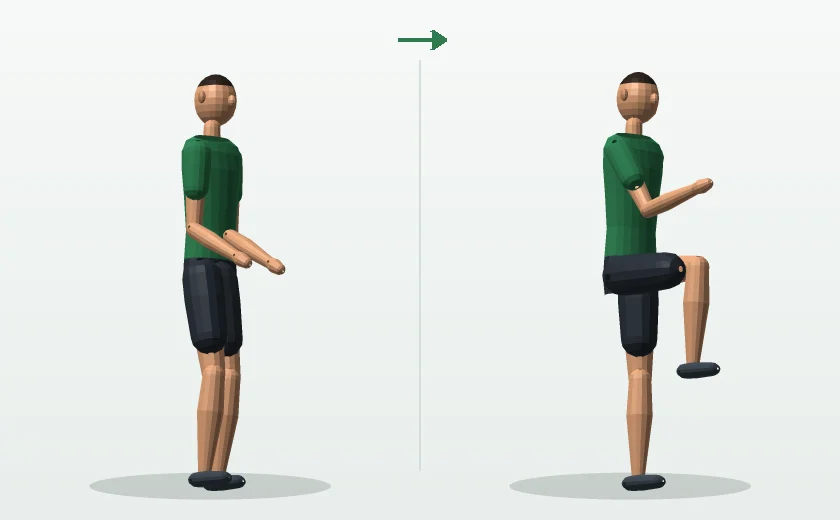
This is the base move of the workout. Higher knees and faster arms make it feel more like brisk walking.
- Stand tall with your feet hip-width apart.
- Lift one knee toward hip height while the opposite arm swings forward.
- Lower it and repeat on the other side.
- Keep a steady rhythm you could hold for several minutes.
Easier: lift your knees only a little. Harder: march faster or pump your arms higher.
Burn calories at home, rain or shine
A magnetic exercise bike is quiet enough for early mornings and small apartments. One purchase, years of workouts for the whole household.

2. Step touch
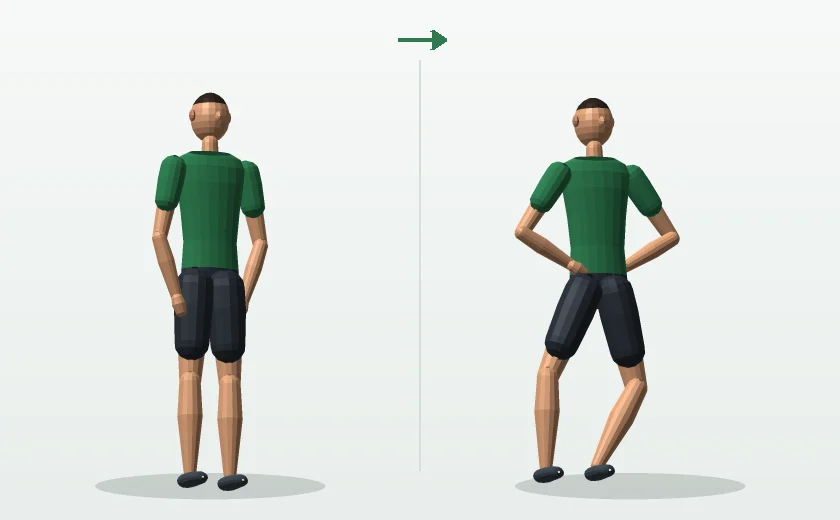
Step touches move you side to side, which works the hips and gives your marching muscles a short break.
- Step your right foot out to the right.
- Bring your left foot in to tap beside it.
- Step left and tap the right foot in.
- Bend your knees slightly and swing your arms with the rhythm.
3. Butt kicks
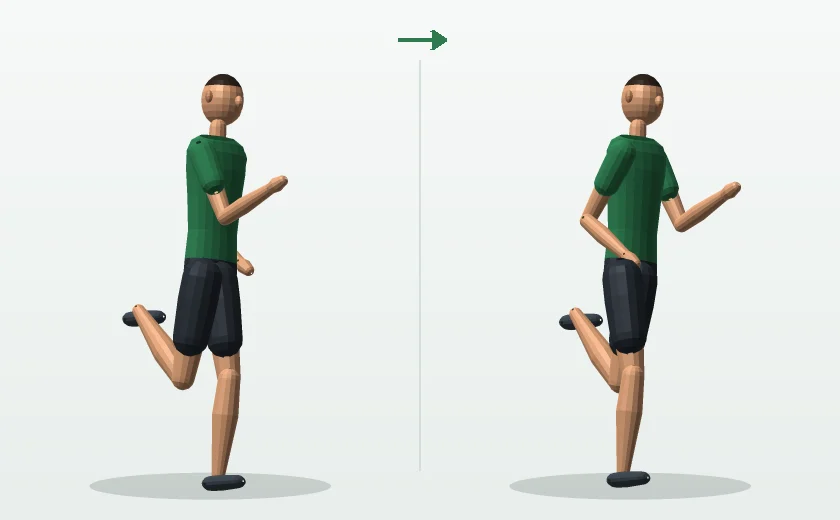
Butt kicks raise your heart rate quickly and work the back of the thighs. Keep them light and quick.
- Stand tall and start jogging or walking in place.
- Bend each knee to bring your heel up toward your glutes.
- Keep your thighs pointing down rather than forward.
- Swing your arms as you would when running.
Low-impact option: walk instead of jog and alternate one heel at a time.
4. Standing punches
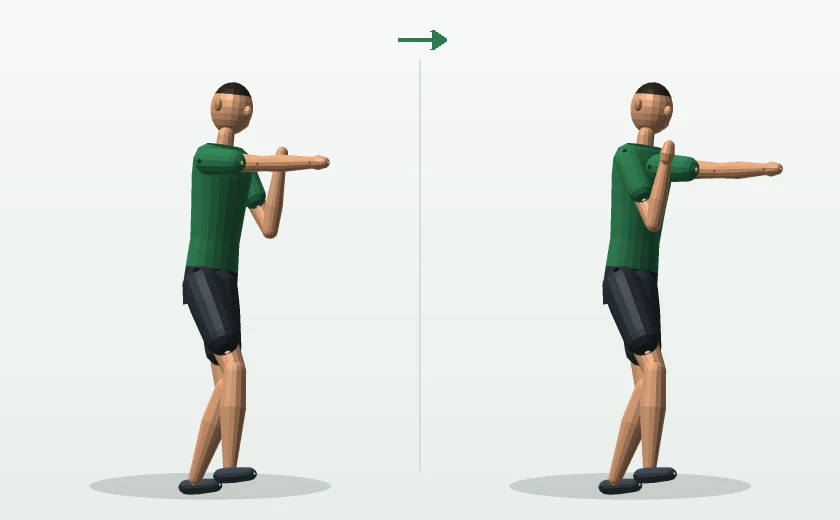
Punches bring in the upper body and core, so more muscles are working at once.
- Stand in a staggered stance with your knees soft and your fists by your chin.
- Punch one arm straight forward, rotating slightly through your torso.
- Pull it back quickly and punch with the other arm.
- Keep your feet light, and march between sets if you like.
5. Step jack
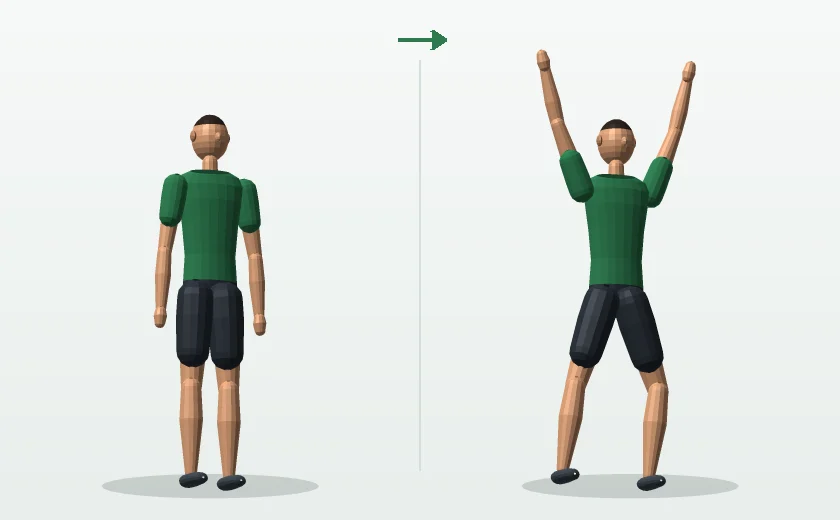
A low-impact version of jumping jacks that gets your arms overhead without any jumping.
- Stand with your feet together and arms by your sides.
- Step one foot out to the side as you raise both arms overhead.
- Step back in and lower your arms.
- Alternate sides at a brisk pace.
The 20-minute walking in place workout
- Minutes 0–3: easy march to warm up.
- Minutes 3–5: high-knee march at a brisk pace.
- Minutes 5–6: step touch.
- Minutes 6–7: butt kicks (or walking heel lifts).
- Minutes 7–8: standing punches.
- Minutes 8–9: step jacks.
- Minutes 9–15: repeat minutes 3–9.
- Minutes 15–18: brisk march, finishing with your fastest 30 seconds.
- Minutes 18–20: slow march and gentle stretching to cool down.
You should be breathing harder but still able to talk in short sentences. That is moderate intensity.
Want a plan that combines easy home workouts with what to eat each day? 35 Days to a Leaner You gives you a 35-day low-carb meal plan plus simple workouts you can do at home.
Easy ways to add more steps at home
Short bursts add up. In a small study, three quick bouts of vigorous stair climbing a day improved fitness in sedentary young adults. You can use the same idea with walking in place:
- March during every TV commercial break or between episodes.
- Walk in place while on the phone.
- Take a 5–10 minute walking break after meals.
- Set a reminder to move for 2–3 minutes every hour if you sit a lot.
- If you work from home, an under-desk walking pad makes this even easier. See our guide to the best walking pads and under-desk treadmills.
Gear that makes indoor walking easier
None of this is required. These are common, inexpensive items that help some people track progress or stay comfortable. We have not personally tested these products. The links go to Amazon search results so you can compare current options and prices.
BEST FOR TRACKING STEPS
Fitness Tracker Watch
A wrist tracker counts steps and active minutes, which makes it easy to see whether your indoor walking is raising your daily total.
Pros
- Tracks steps, active minutes and often heart rate
- Reminders to move if you sit too long
- Many affordable options
Cons
- Step counts are estimates, not exact
- Needs regular charging

BEST BUDGET OPTION
Clip-On Pedometer
If you only want to count steps, a simple clip-on pedometer is cheap and needs no phone or app.
Pros
- Very inexpensive
- Simple to use, long battery life
- No app or account needed
Cons
- Counts steps only
- Must be clipped on correctly to count accurately

BEST FOR COMFORT ON HARD FLOORS
Cushioned Walking Shoes for Men
Walking in place on tile or wood floors can be hard on the feet. A cushioned, supportive walking shoe makes longer sessions more comfortable.
Pros
- Softer landings on hard floors
- Better arch and heel support than going barefoot
- Useful for outdoor walks too
Cons
- Fit varies by brand, so check sizing
- Good pairs cost more than basic sneakers

BEST FOR WORKING FROM HOME
Under-Desk Walking Pad
A compact walking pad lets you walk slowly while you work or watch TV, adding steps without needing extra time in your day.
Pros
- Adds steps during desk work
- Slides under a bed or sofa on many models
- Quiet compared with full treadmills
Cons
- Expensive compared with other options
- Low top speeds on many models

Getting the most weight loss from walking in place
- Track your steps so you know whether your daily total is really going up.
- Eat in a small calorie deficit: extra activity often makes people hungrier. Here’s why you might not lose weight even in a deficit.
- Keep protein high to protect muscle. See how much protein you need.
- Add strength training 2 days a week. Our standing thigh exercises need no equipment.
- Sleep well: short sleep makes cravings harder to control. Read how poor sleep affects weight.
Keep reading
Frequently asked questions
Is walking in place as good as walking outside?
For daily activity, it can be close. In the TV-stepping study, people who stepped in place raised their daily steps about as much as people who walked 30 minutes a day. Outdoor walking adds fresh air, hills and daylight, so mix both if you can.
How many calories does walking in place burn?
It depends on your body weight, your pace and how high you lift your knees. A brisk pace with arm movements burns more than slow shuffling. A fitness tracker can give you a rough estimate, but treat the number as a guide rather than an exact figure.
How long should I walk in place to lose weight?
Start with 10–20 minutes a day and build toward 30 minutes or more most days. US guidelines recommend 150–300 minutes of moderate activity a week, and short sessions count toward that total.
Can walking in place reduce belly fat?
Walking burns calories and supports overall fat loss, which includes belly fat, but you can’t target belly fat directly. Combine it with a calorie deficit, enough protein and strength training.
Is walking in place safe for bad knees?
It is generally low impact. Keep your knee lifts lower, wear supportive shoes and stop if you feel pain. If you have a knee condition, check with your doctor or a physical therapist first.
Sources
- Steeves JA, et al. Can sedentary behavior be made more active? A randomized pilot study of TV commercial stepping versus walking. Int J Behav Nutr Phys Act. 2012.
- Tudor-Locke C, et al. How many steps/day are enough? For adults. Int J Behav Nutr Phys Act. 2011.
- Jenkins EM, et al. Do stair climbing exercise snacks improve cardiorespiratory fitness? Appl Physiol Nutr Metab. 2019.
- ODPHP. Top 10 things to know about the second edition of the Physical Activity Guidelines for Americans.
This article is for general information only and is not medical advice. See our Medical Disclaimer.