
Weight Loss for College Students: A Simple Plan That Fits Campus Life
By WellnessVigor · Updated October 15, 2026 · 9 min read
This article contains affiliate links. If you buy through them, we may earn a small commission at no extra cost to you. Learn more.
College life is built for weight gain. You sit through lectures, sit in the library, sit for exams, then sit with friends at midnight over pizza. Your schedule changes every semester, sleep gets pushed later, and the cafeteria is all-you-can-eat.
The good news: you do not need a strict diet or a gym membership to stay lean in college. You need a few habits that fit around classes and a budget. This guide gives you exactly that.
Quick answer
Most first-year students gain weight, but it is usually a few pounds, not fifteen. To lose weight in college, walk between classes on purpose, take a 3–5 minute movement break every 30–60 minutes of studying, build cafeteria plates around protein and vegetables, keep late-night food planned instead of random, and protect 7+ hours of sleep.
Table of Contents
ToggleIs the “freshman 15” real?
Not exactly, but the trend is real. A 2015 meta-analysis of 32 studies found that first-year students gained an average of about 3 lb (1.4 kg) over roughly five months. More importantly, about 61% of students gained weight, and those who did gained around 7.5 lb (3.4 kg) — much faster than adults in the general population.
Why? The same reasons show up again and again:
- Long sitting days: lectures, library sessions and gaming or streaming at night.
- Unlimited food: buffet-style dining halls and free snacks at events.
- Late nights: short sleep raises hunger and cravings the next day.
- Alcohol and sugary drinks: easy calories that do not fill you up.
- Stress: exams and deadlines push people toward comfort food.
Your hidden calorie burner: everyday movement
Researchers call it NEAT — non-exercise activity thermogenesis. It is the energy you burn walking, standing, carrying a backpack and fidgeting. In a classic overfeeding study, people who naturally increased their everyday movement stored far less fat than those who did not. Changes in NEAT explained a tenfold difference in fat gain.
For a student, NEAT is the easiest lever you have:
- Take the longer route to class and use stairs, not elevators.
- Walk while you listen to recorded lectures or podcasts.
- Stand for part of every library session if there is a standing table.
- Walk to a dining hall that is further away.
- Aim for roughly 8,000–10,000 steps a day. A large 2022 analysis found health benefits kept rising up to around that range for adults under 60.
Read more in our guide to how many steps a day you need to lose weight.
The study-break routine (5 minutes, no equipment)
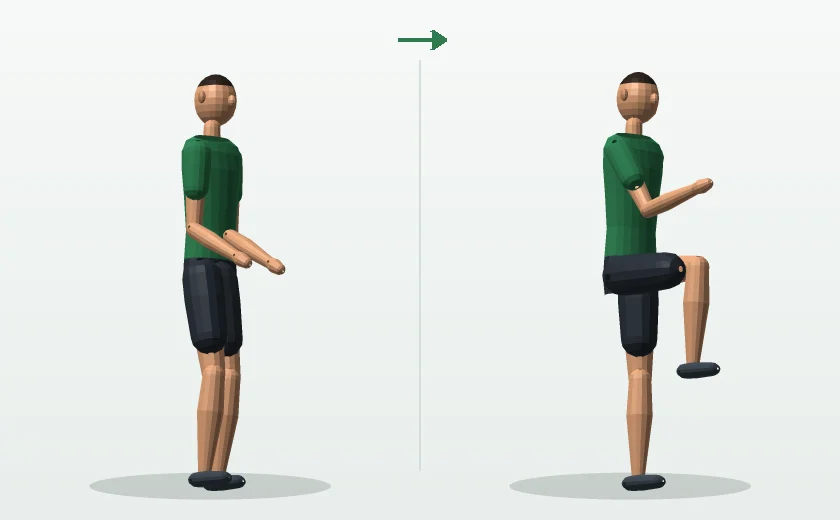
Long study sessions are where most students lose the day. Sitting for hours without a break also worsens blood sugar after meals. In one trial, adults who broke up sitting with 2-minute walks every 20 minutes had noticeably lower glucose and insulin after eating compared with sitting straight through.
Every 30–60 minutes of study, stand up and do one round:
- March in place – 60 seconds, knees up, arms swinging.
- Bodyweight squats – 10 to 15 slow reps.
- Knee-to-elbow crunches – 10 per side.
- Step jacks – 30 seconds (a quiet version of jumping jacks, good for dorms).
- Refill your water bottle before you sit back down.
That is five minutes. Do it six times across a study day and you have added 30 minutes of movement without going anywhere.
Want a done-for-you plan? 35 Days to a Leaner You combines a 35-day low-carb meal plan with simple home workouts, so you know exactly what to eat and how to move each day.
One exercise bike, and the whole family gets fitter
Skip the gym fees and the commute. A quiet magnetic bike lets everyone at home ride while watching TV, in any weather. Twenty to thirty minutes a day adds up to real calories burned.

How to eat in the dining hall without dieting
You do not need to count calories in a cafeteria. Use a plate template instead:
- Half the plate: vegetables or salad (go easy on creamy dressings).
- A quarter: protein — chicken, fish, eggs, beans, tofu, Greek yogurt.
- A quarter: carbs — rice, potatoes, pasta or bread.
- One plate, then wait 10 minutes before deciding on seconds.
- Choose water, milk or unsweetened tea over soda and juice.
Protein matters more than most students realize. It keeps you full and protects muscle while you lose fat. See how much protein you need to lose weight for simple targets.
Dorm-room food that helps instead of hurts
What you keep in your room is what you eat at 11 pm. Stock it on purpose:
- Greek yogurt or skyr (if you have a mini-fridge)
- Hard-boiled eggs, string cheese, canned tuna or chicken
- Fruit that lasts: apples, bananas, oranges
- Microwave oats, popcorn kernels or air-popped popcorn
- Peanut butter in single-serve packs
If you know you will be up late studying, plan one snack instead of grazing. Our list of healthy late-night snacks for weight loss has more ideas.
Sleep: the weight loss habit students skip
Short sleep increases appetite, especially for high-calorie snacks, and makes it harder to stick to anything. Students also shift bedtimes by hours between weekdays and weekends, which works against your body clock.
- Keep wake-up time within about an hour every day.
- Put your phone across the room 30 minutes before bed.
- Avoid caffeine after mid-afternoon on study days.
More here: can poor sleep make you gain weight? and how sleep affects exam performance.
Alcohol, energy drinks and coffee orders
Drinks are where student calories hide. A few beers or mixed drinks can add 500–1,000 calories in a night, and late-night food usually follows. Large sweetened coffee drinks and energy drinks can carry 200–400 calories each.
- Alternate every alcoholic drink with a glass of water.
- Order coffee small, with milk instead of syrup.
- Eat a protein-rich meal before going out so you are not starving later.
Helpful gear for a small budget
These are common, inexpensive options that some people find helpful. We have not personally tested these products. Links go to Amazon so you can check current prices and reviews.
BEST FOR TRACKING STEPS
Basic fitness tracker
A simple step counter shows how much you really move on lecture days versus weekends, which helps you plan walks.
Pros
- Step and sleep tracking
- Long battery life on basic models
Cons
- Accuracy varies by model
- Easy to forget to charge

BEST FOR DORM WORKOUTS
Resistance bands set
Light, cheap and quiet. Bands let you do squats, rows and presses in a small room without bothering roommates.
Pros
- Fits in a drawer
- Several resistance levels
Cons
- Cheap bands can snap
- Less load than weights

BEST FOR DRINKING MORE WATER
Insulated water bottle
Carrying water all day cuts down on soda and energy drinks and gives you a reason to get up for refills.
Pros
- Keeps drinks cold for hours
- Reusable
Cons
- Heavier than plastic
- Can dent if dropped

A sample weekday for a student
- Morning: eggs or yogurt with fruit; walk to the first class.
- Between classes: take stairs, refill water.
- Lunch: dining hall plate method.
- Afternoon study: 5-minute movement break every 45 minutes.
- Evening: 20–30 minute walk with a friend, a gym session or a dorm workout.
- Night: one planned snack, screens off, lights out at a consistent time.
If you want a full home workout, try our walking in place workout or these standing exercises — both work in a dorm room.
Keep reading
Frequently asked questions
How much weight do college students usually gain?
Studies suggest the average first-year gain is about 3 lb, but the majority of students gain some weight, and those who gain average about 7–8 lb.
Can I lose weight in college without a gym?
Yes. Walking more, short study-break workouts, a protein-first plate and better sleep can create a calorie deficit without a gym. Bodyweight workouts in your room cover strength training.
What should I eat late at night while studying?
Pick one planned, protein-rich snack such as Greek yogurt, eggs, or a small portion of peanut butter on toast. Avoid eating straight from a large bag.
Do energy drinks cause weight gain?
Sugary energy drinks add calories that do not fill you up, and caffeine late in the day can cut your sleep, which raises next-day hunger.
Sources
- Vadeboncoeur C, et al. A meta-analysis of weight gain in first year university students: is freshman 15 a myth? BMC Obes. 2015.
- Levine JA, et al. Role of nonexercise activity thermogenesis in resistance to fat gain in humans. Science. 1999.
- Dunstan DW, et al. Breaking up prolonged sitting reduces postprandial glucose and insulin responses. Diabetes Care. 2012.
- Paluch AE, et al. Daily steps and all-cause mortality: a meta-analysis of 15 international cohorts. Lancet Public Health. 2022.
This article is for general information only and is not medical advice. See our Medical Disclaimer.