
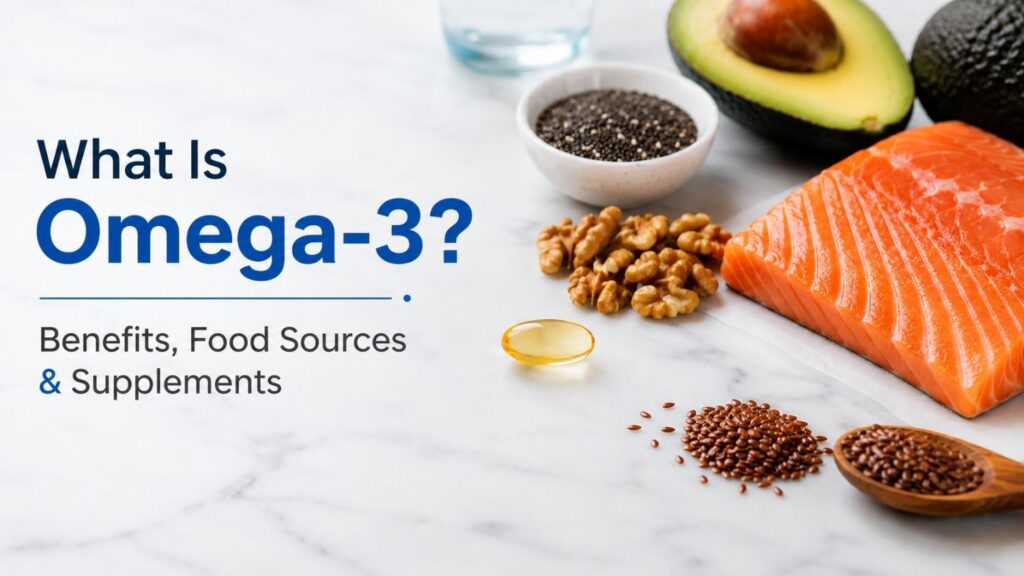
What Is Omega-3? Benefits, Food Sources & Supplements
If you’ve spent more than five minutes looking into healthy eating, you’ve definitely heard of Omega-3s. People talk about them like a magic bullet for everything from heart health to clear skin. But what actually are they, and do you really need to take a daily fish oil pill to stay healthy?
In simple terms, Omega-3s are essential fats. Your body needs them to function properly, but it can’t produce them on its own in sufficient amounts. That means you have to get them through what you eat—or through supplements if your diet falls short.
Here is a straightforward, hype-free guide to understanding Omega-3s: what they do, where to find them, and how to figure out if you’re getting enough.
What Is Omega-3?
Omega-3s are a family of polyunsaturated fatty acids that serve as fundamental building blocks for your body. Think of them as high-quality structural materials. They make up a key part of every cell membrane in your body, keeping those cells fluid and helping them communicate effectively.
Beyond basic cellular structure, Omega-3s play a direct role in:
- Maintaining healthy cell membranes throughout the body
- Supporting brain development and cognitive performance
- Regulating hormone production
- Keeping your cardiovascular system running smoothly
The 3 Main Types of Omega-3
Not all Omega-3s are created equal. There are three main types you need to know about:
1. ALA (Alpha-Linolenic Acid)
- Where it’s found: Mostly in plant foods like flaxseeds, chia seeds, walnuts, and hemp seeds.
- How it works: Your body uses ALA primarily for energy. While it can convert ALA into EPA and DHA, that conversion process is pretty slow and inefficient in humans (often converting less than 10%).
2. EPA (Eicosapentaenoic Acid)
- Where it’s found: Cold-water oily fish (like salmon and mackerel) and seafood.
- How it works: EPA is a major player in reducing cellular inflammation and supporting heart and blood vessel health.
3. DHA (Docosahexaenoic Acid)
- Where it’s found: Oily fish, seafood, and specialized algae.
- How it works: DHA is a structural component of your brain, eyes (retina), and nervous system. It’s particularly critical during pregnancy and early childhood development.
Key Health Benefits of Omega-3s
Why do nutritionists keep talking about these fats? Here is what the science says about how they support your body.
1. Supports Heart Health
Omega-3s are best known for their cardiovascular perks. They help lower triglycerides (a type of fat in your blood), keep blood vessel walls relaxed and clear, and support a steady, healthy heart rhythm.
2. Promotes Brain Function
Because DHA makes up a large portion of the fat in your brain, getting enough Omega-3 is directly tied to mental clarity, focus, memory, and long-term cognitive health as you age.
3. Supports Eye Health
DHA is a major structural component of your eyes’ retinas. Adequate intake helps protect against structural degeneration and keeps your eyes lubricated and functioning properly.
4. May Help Reduce Inflammation
Chronic, quiet inflammation is at the root of many joint issues and systemic conditions. EPA and DHA help moderate the body’s inflammatory response, which can aid in joint mobility and post-exercise recovery.
5. Supports Healthy Skin
Omega-3s strengthen the skin barrier, helping your skin hold onto moisture, fight off environmental irritants, and prevent excessive dryness or irritation.
6. Supports Mental Well-being
While Omega-3s are certainly not a substitute for medical mental health care, research suggests that adequate levels of EPA can help support mood regulation and overall emotional balance.
7. Supports Pregnancy and Baby Development
DHA is indispensable during pregnancy and breastfeeding. It serves as a literal building block for a baby’s developing brain, eyes, and central nervous system.
Signs You Might Not Be Getting Enough
It’s rare to have a medical, life-threatening “deficiency” in Omega-3s, but low intake is very common. The tricky part is that signs of low intake are non-specific and can overlap with many other health conditions.
You might not be getting enough if you experience:
- Persistent dry or flaky skin
- Unusually dry or irritated eyes
- Brittle hair and weak nails
- Frequent fatigue or unexplained brain fog
- Mild joint discomfort or stiffness
- Unpredictable mood swings
Note: Always check with a doctor if you’re experiencing persistent symptoms, as these can stem from a variety of causes.
Who May Benefit Most From Paying Attention to Omega-3s?
While everyone needs these essential fats, some people need to be much more intentional about getting them:
- People who rarely or never eat seafood
- Vegetarians and vegans (since ALA conversion to EPA/DHA is low)
- Older adults looking to protect joint and cognitive health
- Pregnant and breastfeeding mothers
- Individuals with digestive disorders that interfere with fat absorption
Best Natural Food Sources
If you eat animal products, oily seafood is your most direct ticket to EPA and DHA. If you eat a plant-based diet, seeds, nuts, and algae are your go-to options.
| Food Source | Approximate Omega-3 Content | Primary Type |
| Salmon | High | EPA & DHA |
| Sardines | High | EPA & DHA |
| Mackerel | High | EPA & DHA |
| Herring | High | EPA & DHA |
| Anchovies | High | EPA & DHA |
| Trout | High | EPA & DHA |
| Flaxseeds | High | ALA (Plant) |
| Chia Seeds | Moderate | ALA (Plant) |
| Walnuts | Moderate | ALA (Plant) |
| Hemp Seeds | Moderate | ALA (Plant) |
| Algae Oil / Algae | High | EPA & DHA (Plant-derived) |
What a balanced day might look like:
- Breakfast: Oatmeal sprinkled with 1 tablespoon of ground flaxseeds (gets your ALA covered).
- Lunch: A fresh green salad topped with walnuts and olive oil.
- Dinner: A 4 to 5-ounce piece of grilled salmon with roasted vegetables.
If you don’t eat fish, getting enough DHA and EPA from food alone becomes tricky due to low conversion rates from plant-based ALA. That’s where supplementation comes in.
Types of Omega-3 Supplements: Pros & Cons
Navigating the supplement aisle can feel overwhelming. Here is how the main choices stack up:
1. Fish Oil
- Pros: Widely available, affordable, provides a direct source of both EPA and DHA.
- Cons: Can cause fishy burps; not suitable for vegans or people with seafood allergies.
2. Krill Oil
- Pros: Derived from tiny crustaceans; easily absorbed by the body; usually comes in smaller, easier-to-swallow capsules.
- Cons: Generally more expensive than standard fish oil; lower total dose per pill.
3. Algae Oil
- Pros: 100% vegan, highly sustainable, directly supplies DHA (and often EPA) without passing through a fish.
- Cons: Pricier than standard fish oil.
4. Cod Liver Oil
- Pros: Supplies Omega-3s along with natural Vitamin A and Vitamin D.
- Cons: Tastes distinct; you have to monitor your total intake to avoid taking in too much Vitamin A.
How Much Omega-3 Should You Take?
If you are treating a specific health condition (like high triglycerides), a medical professional might prescribe 2,000 to 4,000 mg daily. Never take high-dose supplements without medical oversight.
Possible Side Effects & Safety
Omega-3 supplements are generally very safe, but high doses or bad timing can cause mild side effects:
- Fishy burps or aftertaste
- Mild stomach upset or nausea
- Loose stools
Important Warning: High doses of Omega-3s can have a mild blood-thinning effect. If you are taking blood thinners (like warfarin), aspirin, or are preparing for surgery, talk to your doctor before taking Omega-3 supplements.
When Should You Consider Supplements?
Food should always come first, but supplements make sense if:
- You don’t like or rarely eat fish.
- You follow a strict vegan or vegetarian diet.
- You are pregnant or planning to become pregnant (upon doctor approval).
- Your doctor recommends higher doses for specific heart or joint support.