
Standing Thigh Exercises at Home: 6 Moves for Inner and Outer Thighs (No Equipment)
By WellnessVigor · Updated October 12, 2026 · 9 min read
This article contains affiliate links. If you buy through them, we may earn a small commission at no extra cost to you. Learn more.
If you want stronger, firmer thighs but don’t like getting down on the floor, standing exercises are an easy place to start. The six moves below work the inner thighs (adductors), outer hips (abductors), front thighs (quads) and glutes using only your body weight. Each move has a picture showing the start and finish position.
One honest note first: no exercise burns fat from one chosen spot. Thigh exercises build and shape the muscle underneath, while fat loss comes from your whole routine: a modest calorie deficit, daily movement and decent sleep. This guide covers both sides.
Quick answer
Do sumo squats, side lunges, standing side leg raises, reverse lunges, bodyweight squats and step jacks for 2–3 rounds of 10–15 reps (or 30–40 seconds) each, 2–3 times a week. Combine the workout with a small calorie deficit and daily walking, because research shows that training one body part does not selectively burn the fat on it.
Table of Contents
ToggleCan thigh exercises burn thigh fat?
Not directly. In a 12-week study, adults trained only one leg on a leg press machine. Their total body fat went down, but the fat loss showed up mostly in the upper body and trunk, not in the trained leg. A separate study found that six weeks of daily ab exercises did not reduce belly fat either.
That doesn’t make thigh exercises useless. A large 2022 review of 58 trials found that regular resistance training lowered body fat percentage by about 1.5 percentage points compared with not exercising, and it also reduced visceral (deep belly) fat. Stronger leg muscles also make walking, stairs and everyday movement easier, which adds to the calories you burn each day.
So the realistic plan is: train your thighs for shape and strength, and lose fat with your overall habits. If the scale isn’t moving, read why you might not be losing weight in a calorie deficit.
How to do this workout
- Warm up for 3–5 minutes: march in place, swing your arms and do a few slow half squats.
- Beginners: 2 rounds of 10 reps per move (or 30 seconds), resting 30–60 seconds between moves.
- Intermediate: 3 rounds of 12–15 reps (or 40 seconds).
- How often: 2–3 non-consecutive days a week. US activity guidelines recommend muscle-strengthening work at least 2 days a week.
- Form first: move slowly, keep your knees in line with your toes, and stop if you feel sharp pain.
Mild soreness a day or two after a new workout is normal. If it surprises you, here’s why muscles hurt after your first workout.
1. Sumo squat (inner thighs and glutes)
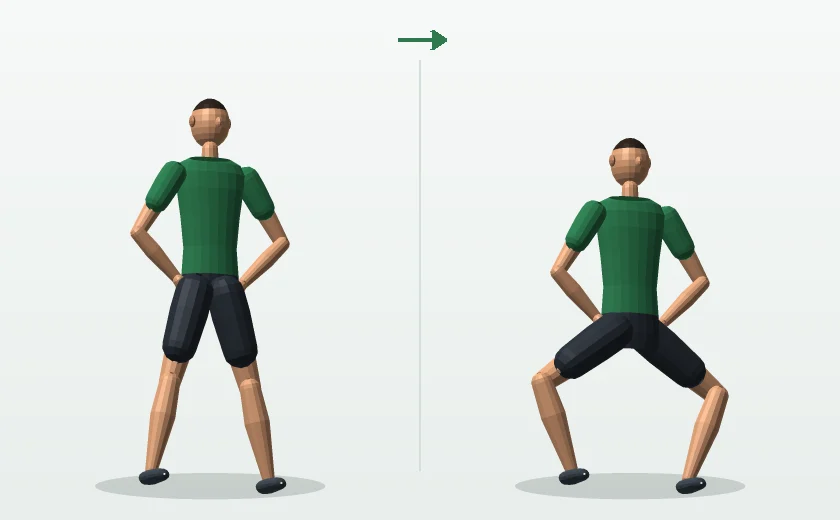
The wide stance and turned-out toes put more work on the inner thighs than a regular squat.
- Stand with your feet wider than your hips, toes turned out about 30–45 degrees. Put your hands on your hips.
- Push your hips back and down, letting your knees travel out over your toes.
- Go as low as you comfortably can while keeping your chest up.
- Press through your whole foot to stand, squeezing your glutes and inner thighs at the top.
Tip: if your knees cave inward, narrow your stance slightly and don’t go as deep.
One exercise bike, and the whole family gets fitter
Skip the gym fees and the commute. A quiet magnetic bike lets everyone at home ride while watching TV, in any weather. Twenty to thirty minutes a day adds up to real calories burned.

2. Side lunge (inner thighs, quads and glutes)
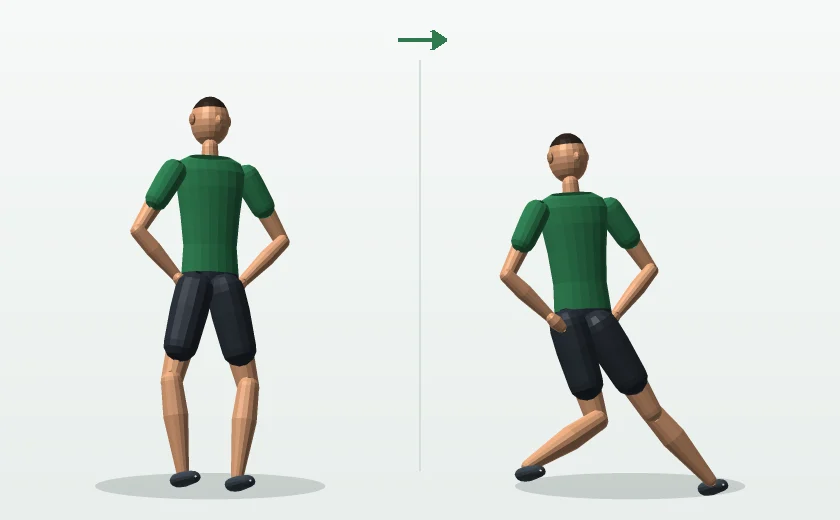
Side lunges stretch the inner thigh of the straight leg while the bent leg does most of the work.
- Stand with your feet about hip-width apart, hands on your hips.
- Take a big step to the left. Bend your left knee and sit your hips back, keeping your right leg straight.
- Keep both feet flat and pointing forward.
- Push off your left foot to return to the start. Alternate sides.
Tip: start with a shorter step and a shallow bend, then go wider as your hips loosen up.
3. Standing side leg raise (outer hips)
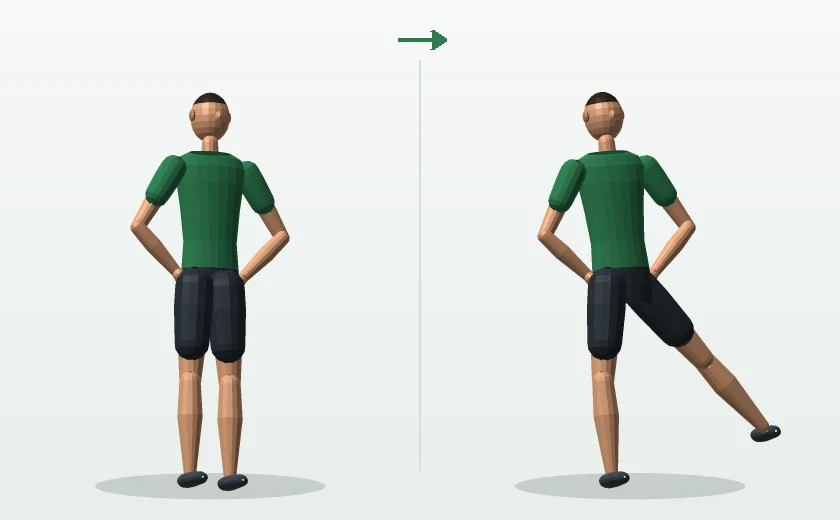
This move targets the hip abductors on the outside of the hip, which help keep your knees and pelvis stable when you walk and lunge.
- Stand tall with your hands on your hips or one hand on a chair for balance.
- Keeping your leg straight and toes pointing forward, lift one leg out to the side.
- Lift only as high as you can without leaning far over the standing leg.
- Lower slowly. Do all reps on one side, then switch.
Tip: slow lowering makes this harder without any equipment. Add ankle weights or a loop band later.
4. Reverse lunge (quads and glutes)
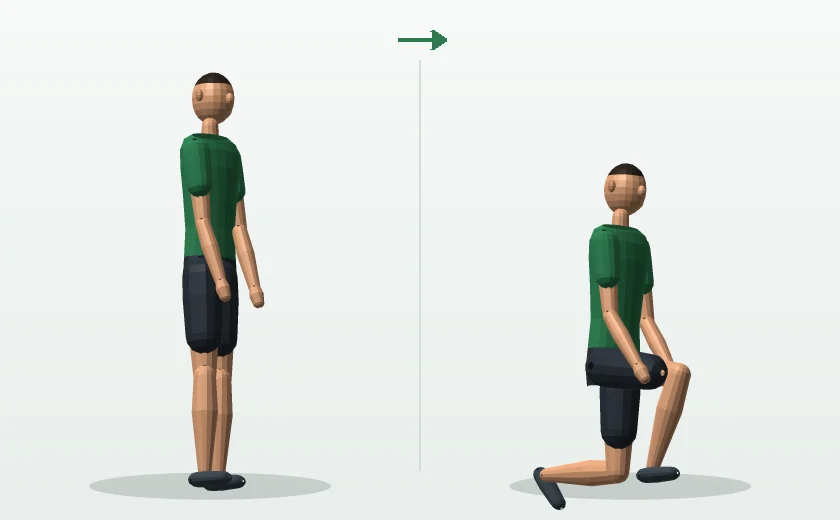
Stepping backward is usually easier on the knees than stepping forward, which makes this a good lunge for beginners.
- Stand tall with your feet hip-width apart.
- Step one foot back and lower your back knee toward the floor.
- Keep your front knee over your ankle and your weight in your front heel.
- Push through your front foot to return. Alternate legs.
Tip: hold a wall or chair if your balance is shaky. You don’t need to touch the floor with your back knee.
5. Bodyweight squat (front thighs and glutes)
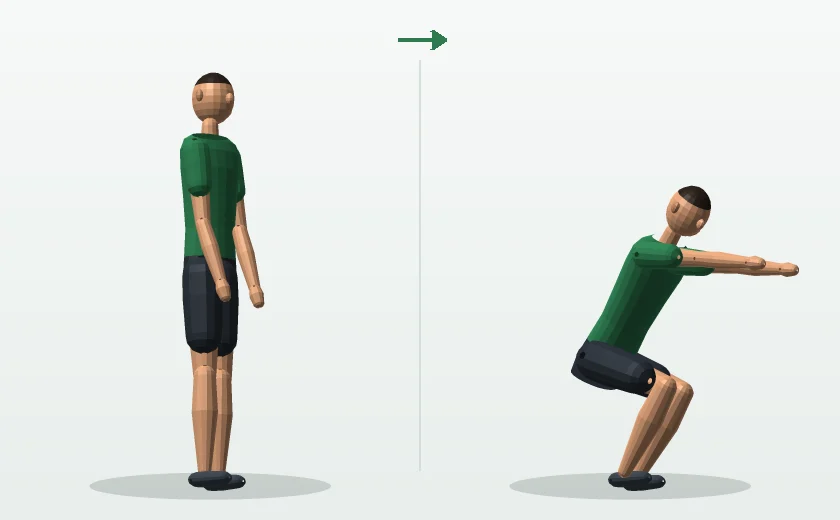
The basic squat works the big muscles at the front of the thigh and the glutes, and it builds the strength you use every time you stand up from a chair.
- Stand with your feet about shoulder-width apart.
- Reach your arms forward, then push your hips back and bend your knees.
- Lower until your thighs are close to parallel with the floor, or as far as is comfortable.
- Stand back up by pressing through your heels.
Tip: squatting down to a chair and standing back up is a good way to learn the movement.
6. Step jack (cardio finisher)
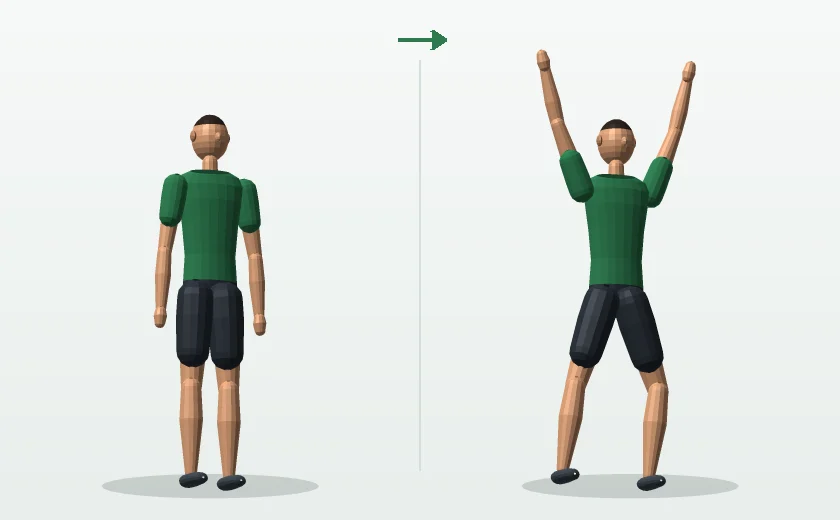
Step jacks are a low-impact version of jumping jacks. They raise your heart rate and work the outer hips without jumping.
- Stand with your feet together and arms by your sides.
- Step one foot out to the side while raising both arms overhead.
- Step back in and lower your arms.
- Alternate sides at a brisk, steady pace.
Tip: do this last, for 40–60 seconds, to finish each round with a little cardio.
A simple 20-minute standing thigh workout
- Warm-up: 3 minutes of marching in place.
- Sumo squat: 12 reps
- Side lunge: 8 reps per side
- Standing side leg raise: 12 reps per side
- Reverse lunge: 8 reps per side
- Bodyweight squat: 12 reps
- Step jack: 45 seconds
- Rest 1–2 minutes, then repeat for 2–3 rounds.
- Cool down with a gentle stretch for the inner thighs, quads and hips.
When 3 rounds feel easy, add reps, slow down the lowering phase, or add a loop band or ankle weights.
Want a full plan that puts this together? 35 Days to a Leaner You combines simple home workouts with a 35-day low-carb meal plan, so you know exactly what to eat and how to move each day.
Helpful equipment for thigh workouts
You don’t need any equipment for the routine above. If you want to make it harder over time, these are common, inexpensive add-ons. We have not personally tested these products. The picks below are product types with what to check before you buy, linked to Amazon search results so you can compare options and current prices.
BEST FOR SUMO SQUATS AND SIDE STEPS
Fabric Resistance Loop Bands
A wide fabric band around your thighs or above your knees adds resistance to sumo squats, side steps and side leg raises. Fabric bands tend to roll and pinch less than thin latex ones.
Pros
- Adds resistance to almost every move in this guide
- Light, cheap and easy to store
- Usually sold in sets with several resistance levels
Cons
- Sizing varies by brand, so check the band length
- Too strong a band can pull your knees inward

BEST FOR SIDE LEG RAISES
Adjustable Ankle Weights
Ankle weights make standing leg raises and marching harder without changing the movement. Adjustable pairs let you start light and add weight as you get stronger.
Pros
- Simple way to progress leg raises
- Adjustable versions grow with you
- Also useful for walking in place
Cons
- Not suitable for jumping or running
- Start light to protect your knees and hips

BEST FOR SIDE LUNGES
Exercise Sliders (Gliding Discs)
Sliders let your foot glide out to the side during side lunges, which makes the move smoother and more challenging for the inner thighs.
Pros
- Very small and inexpensive
- Work on carpet or hard floors (check which side is for which surface)
- Add variety to lunges
Cons
- Can be slippery for beginners
- Take time to control

BEST FOR A STABLE SURFACE
Thick Non-Slip Exercise Mat
A non-slip mat gives you a stable, cushioned spot for lunges, cool-down stretches and any floor work you add later.
Pros
- Helps prevent slipping on hard floors
- Cushions knees during lunges and stretches
- Marks out a workout space at home
Cons
- Very thick mats can feel wobbly for balance moves
- Takes up some storage space

What actually helps with thigh fat
- A modest calorie deficit: fat loss happens across your whole body, and you can’t choose where it comes from first.
- Protein at every meal: it helps you keep muscle while you lose fat. See how much protein you need to lose weight.
- Daily walking: it adds steady calorie burn without much stress on the joints. Here’s how many steps a day help with weight loss.
- Sleep: short sleep makes hunger harder to manage. Read how poor sleep can make you gain weight.
- Patience: lower-body fat is often among the last places people notice change, so track your progress with measurements and photos, not just the scale.
Keep reading
Frequently asked questions
How long does it take to see results on my thighs?
Most people feel stronger within 2–4 weeks of training 2–3 times a week. Visible changes in shape usually take longer, often 8–12 weeks or more, and depend mostly on overall fat loss.
Can I do these thigh exercises every day?
It’s better to rest at least one day between strength sessions so your muscles can recover. On the days in between, walking or light cardio is a good choice.
Do side leg raises work the inner or outer thigh?
Standing side leg raises mainly work the outer hip muscles (abductors). For the inner thighs, sumo squats and side lunges are the better choices in this routine.
Will squats make my thighs bigger?
Bodyweight squats build strength and some muscle tone, but they rarely add much size. Large muscle gains usually require heavy weights, a calorie surplus and years of training.
Is walking good for losing thigh fat?
Walking burns calories and supports overall fat loss, which is what eventually reduces thigh fat. It works well alongside the strength moves in this guide.
Sources
- Ramírez-Campillo R, et al. Regional fat changes induced by localized muscle endurance resistance training. J Strength Cond Res. 2013.
- Vispute SS, et al. The effect of abdominal exercise on abdominal fat. J Strength Cond Res. 2011.
- Wewege MA, et al. The effect of resistance training in healthy adults on body fat percentage, fat mass and visceral fat: a systematic review and meta-analysis. Sports Med. 2022.
- Westcott WL. Resistance training is medicine: effects of strength training on health. Curr Sports Med Rep. 2012.
- ODPHP. Top 10 things to know about the second edition of the Physical Activity Guidelines for Americans.
This article is for general information only and is not medical advice. See our Medical Disclaimer.