
Best Running Shoes for Beginners (2027): 6 Comfortable Picks on Amazon
By WellnessVigor · Updated October 15, 2026 · 8 min read
This article contains affiliate links. If you buy through them, we may earn a small commission at no extra cost to you. Learn more.
The right running shoe will not turn you into an athlete overnight, but the wrong one can make every run feel harder than it should. For beginners, the goal is simple: a comfortable, well-cushioned shoe that fits properly and suits easy, steady running.
Here are six popular men’s running shoes on Amazon that are great for new runners, plus what research says about choosing shoes and how to get the right fit.
Quick answer
Pick the shoe that feels most comfortable when you jog in it. For most beginners, a cushioned neutral trainer such as the Brooks Ghost, ASICS Gel-Cumulus or HOKA Clifton is a safe choice. Leave a thumb’s width of space at the toe and replace shoes every 500 to 800 km.
Table of Contents
ToggleWhat research says about choosing running shoes
There is no single “injury-proof” shoe. A well-known review by running-shoe scientist Benno Nigg concluded that the best approach is a comfort filter: try several shoes and choose the one that feels most comfortable, because comfort seems to match how your body naturally wants to move.
Cushioning also matters. In a randomised trial of 848 recreational runners, those given harder shoes had a higher injury risk than those in softer shoes over six months. That is one reason well-cushioned daily trainers are a sensible starting point for beginners.
How to choose your first running shoes
- Neutral vs stability: most people do well in neutral shoes. Stability shoes add support if your feet roll inward a lot or you have had related pain.
- Cushioning: medium to high cushioning feels kinder for new runners.
- Fit: about a thumb’s width between your longest toe and the end of the shoe, a snug heel and room to wiggle your toes.
- Width: if shoes feel tight across the forefoot, look for wide (2E) sizes.
- Try them late in the day, when feet are slightly bigger, and with your running socks.
At a glance
Prices change often, so check Amazon for the latest price and sizes.
| Shoe | Type | Feel | Best for |
|---|---|---|---|
| Brooks Ghost | Neutral | Soft, smooth | Best overall |
| ASICS Gel-Cumulus 27 | Neutral | Soft, comfortable | Best value |
| HOKA Clifton 10 | Neutral | Very cushioned, light | Max comfort |
| Nike Pegasus 41 | Neutral | Responsive | Versatile everyday runs |
| ASICS Novablast 5 | Neutral | Bouncy | Fun, faster runs |
| New Balance Fresh Foam X Evoz V4 | Neutral | Cushioned | Budget pick |
Want a done-for-you plan? 35 Days to a Leaner You combines a 35-day low-carb meal plan with simple home workouts, so you know exactly what to eat and how to move each day.
One exercise bike, and the whole family gets fitter
Skip the gym fees and the commute. A quiet magnetic bike lets everyone at home ride while watching TV, in any weather. Twenty to thirty minutes a day adds up to real calories burned.

The 6 best running shoes for beginners
These are common, inexpensive options that some people find helpful. We have not personally tested these products. Links go to Amazon so you can check current prices and reviews.
BEST OVERALL
Brooks Ghost (Men’s)
A reliable, soft and smooth neutral shoe that suits almost every new runner. Brooks is one of the most trusted running brands, and the Ghost is its best-selling daily trainer.
Pros
- Comfortable cushioning
- Smooth heel-to-toe ride
- Wide sizes available
Cons
- Not the lightest

BEST VALUE
ASICS Gel-Cumulus 27 (Men’s)
Soft, comfortable cushioning at a lower price than ASICS’s premium models. A great everyday trainer for easy runs.
Pros
- Good value
- Comfortable fit
- Durable outsole
Cons
- Less bouncy than premium foams

MOST CUSHIONED
HOKA Clifton 10 (Men’s)
Thick yet light cushioning that feels gentle on the legs, popular with beginners and heavier runners.
Pros
- Very cushioned
- Lightweight for its size
- Rocker shape for easy rolling
Cons
- Higher price
- Stack height takes getting used to

MOST VERSATILE
Nike Pegasus 41 (Men’s)
A responsive, do-it-all trainer that works for easy runs, faster sessions and the gym.
Pros
- Responsive feel
- Works for many run types
- Classic, durable design
Cons
- Firmer than plush shoes
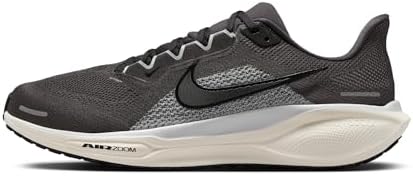
MOST FUN TO RUN IN
ASICS Novablast 5 (Men’s)
A bouncy, energetic shoe that makes running feel lively, good once you start running a little faster.
Pros
- Very bouncy foam
- Comfortable upper
- Good for faster runs
Cons
- Less stable on sharp turns

BEST BUDGET PICK
New Balance Fresh Foam X Evoz V4 (Men’s)
Cushioned Fresh Foam at an entry-level price. A sensible choice if you are not sure running will stick yet.
Pros
- Affordable
- Comfortable cushioning
- Good for walking too
Cons
- Less durable than premium models

How long do running shoes last?
Most running shoes last roughly 500 to 800 km (300 to 500 miles). Replace them sooner if the midsole looks creased and flat, the tread is worn through, or you start to feel new aches after runs. Keeping a second pair and rotating them can help them last longer.
Keep reading
Frequently asked questions
Do beginners need expensive running shoes?
No. Comfort and fit matter far more than price. A mid-priced cushioned trainer is enough for most new runners.
Should I get stability or neutral running shoes?
Most people do well in neutral shoes. Try stability shoes if you have flat feet with pain or your feet roll inward a lot.
Can I use running shoes for walking and the gym?
Yes for walking. For heavy weightlifting, flatter, firmer shoes are more stable.
What size running shoes should I buy?
Many runners go half a size up from their everyday shoes. Leave about a thumb’s width at the toe.
Sources
- Nigg BM, et al. Running shoes and running injuries: mythbusting and a proposal for two new paradigms: preferred movement path and comfort filter. Br J Sports Med. 2015.
- Malisoux L, et al. Shoe cushioning influences the running injury risk according to body mass: a randomized controlled trial involving 848 recreational runners. Am J Sports Med. 2020.
This article is for general information only and is not medical advice. See our Medical Disclaimer.