
Best Running Shoes for Weight Loss and Heavier Runners (2027): 6 Supportive Picks
By WellnessVigor · Updated October 15, 2026 · 8 min read
This article contains affiliate links. If you buy through them, we may earn a small commission at no extra cost to you. Learn more.
If you are starting to run or power-walk to lose weight, your shoes have a bigger job to do. More body weight means more force on every step, and shoes that feel fine for a light runner can feel flat, unstable or tight for you within weeks.
These six men’s running shoes on Amazon are popular with heavier runners and walkers for their support, cushioning, durability and wide sizes. We also explain what research says and how to get the right fit.
Quick answer
Look for a stable base, durable cushioning and a roomy fit, often in a wide (2E or 4E) size. The Brooks Adrenaline GTS is our top all-round pick, the Brooks Beast GTS is built for maximum support, and the Brooks Glycerin or New Balance 1080 suit people who want plush neutral cushioning.
Table of Contents
ToggleWhat heavier runners need in a shoe
- Stability. A wider base and support features help keep your foot steady, especially when you are tired.
- Durable cushioning. Foam compresses faster under more weight, so a durable midsole matters.
- Roomy fit. Feet often spread more under load. Wide sizes prevent rubbing and numb toes.
- Removable insole. Useful if you wear orthotics.
- Good outsole rubber for grip and longer life.
What research says about cushioning and body weight
In a randomised trial of 848 recreational runners, people given harder shoes had about a 50% higher injury risk than those in softer shoes over six months. Interestingly, when the researchers split runners by weight, the protective effect of softer cushioning was clear in lighter runners but not statistically clear in heavier runners.
That does not mean cushioning is pointless if you are heavier. It suggests that for heavier runners, comfort, stability, fit and a gradual build-up matter at least as much as soft foam. Choose the shoe that feels most comfortable and stable when you jog in it.
At a glance
Prices change often; check Amazon for the latest price and wide sizes.
| Shoe | Type | Best for |
|---|---|---|
| Brooks Adrenaline GTS 23 | Stability | Best overall |
| Brooks Beast GTS 24 | Max stability | Maximum support, wide sizes |
| Brooks Glycerin 22 | Neutral, max cushion | Plush comfort |
| New Balance Fresh Foam X 1080 | Neutral, max cushion | Soft and roomy |
| ASICS Gel-Kayano 33 | Stability | Long walks and runs |
| Saucony Echelon 9 | Neutral, roomy | Wide feet and orthotics |
Want a done-for-you plan? 35 Days to a Leaner You combines a 35-day low-carb meal plan with simple home workouts, so you know exactly what to eat and how to move each day.
Burn calories at home, rain or shine
A magnetic exercise bike is quiet enough for early mornings and small apartments. One purchase, years of workouts for the whole household.

The 6 best running shoes for weight loss
These are common, inexpensive options that some people find helpful. We have not personally tested these products. Links go to Amazon so you can check current prices and reviews.
BEST OVERALL
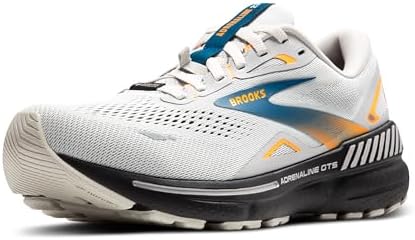
Brooks Adrenaline GTS 23 (Men’s)
A balanced stability shoe with soft cushioning and guide rails that gently support your stride. A favorite for heavier runners and walkers, available in wide sizes.
Pros
- Stable but not stiff
- Comfortable cushioning
- Wide and extra-wide sizes
Cons
- Not the lightest shoe
BEST MAXIMUM SUPPORT
Brooks Beast GTS 24 (Men’s)
Built for runners and walkers who want the most support and a roomy fit. Wide base, generous cushioning and wide sizes.
Pros
- Very stable
- Roomy fit
- Great for walking and running
Cons
- Heavier and bulkier

BEST PLUSH NEUTRAL SHOE
Brooks Glycerin 22 (Men’s)
Brooks’s softest neutral daily trainer, with deep cushioning for long, easy miles.
Pros
- Very soft ride
- Comfortable upper
- Durable
Cons
- Higher price

BEST SOFT AND ROOMY
New Balance Fresh Foam X 1080 (Men’s)
A highly cushioned neutral shoe with a comfortable, accommodating fit and wide size options.
Pros
- Plush cushioning
- Comfortable knit upper
- Wide sizes
Cons
- Can feel soft for very heavy runners who want firmness

BEST STABILITY FOR LONG SESSIONS
ASICS Gel-Kayano 33 (Men’s)
A premium stability shoe with plenty of cushioning and a secure fit for longer runs and brisk walks.
Pros
- Excellent stability
- Soft landings
- Secure heel
Cons
- Premium price

BEST FOR WIDE FEET AND ORTHOTICS
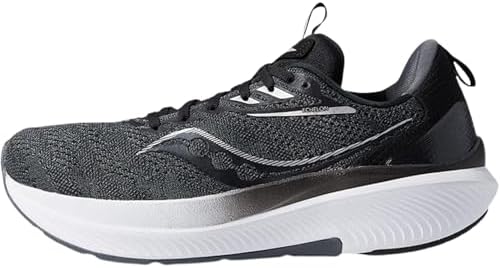
Saucony Echelon 9 (Men’s)
A roomy, cushioned shoe with a removable insole that makes space for custom orthotics.
Pros
- Extra roomy toe box
- Removable insole
- Good value
Cons
- Less widely stocked in all sizes
Tips to run or walk safely while losing weight
- Start with walking, then add short running intervals. See our 8-week run-walk plan.
- Run on softer, flat surfaces such as tracks, paths or a treadmill when you begin.
- Strengthen your legs and hips twice a week with squats, step-ups and glute bridges.
- Replace shoes sooner if the cushioning feels flat, often around 500 km for heavier runners.
- Listen to pain. Mild muscle soreness is normal; sharp or worsening joint pain is not.
Keep reading
- Running for weight loss: a beginner’s guide
- Best running shoes for beginners
- Best incline treadmill for walking
- Walking after meals for weight loss
Frequently asked questions
What running shoes are best for heavy runners?
Stable, durable, well-cushioned shoes with a roomy fit, such as the Brooks Adrenaline GTS, Brooks Beast GTS or ASICS Gel-Kayano. Comfort when you jog in them is the best guide.
Do I need wide running shoes?
If shoes feel tight across the ball of your foot or your toes go numb, try a wide (2E) or extra-wide (4E) size.
Are these shoes good for walking too?
Yes. All six work well for brisk walking, which is a great way to start losing weight before running.
How often should heavier runners replace shoes?
Often around 500 km (300 miles), or sooner if the cushioning feels flat or new aches appear.
Sources
- Malisoux L, et al. Shoe cushioning influences the running injury risk according to body mass: a randomized controlled trial involving 848 recreational runners. Am J Sports Med. 2020.
- Nigg BM, et al. Running shoes and running injuries: mythbusting and a proposal for two new paradigms. Br J Sports Med. 2015.
- Videbæk S, et al. Incidence of running-related injuries per 1000 h of running in different types of runners. Sports Med. 2015.
This article is for general information only and is not medical advice. See our Medical Disclaimer.