
Weight Loss Without Counting Calories: A Simple Approach for Beginners
By WellnessVigor · Updated October 15, 2026 · 7 min read
This article contains affiliate links. If you buy through them, we may earn a small commission at no extra cost to you. Learn more.
Counting every calorie works for some people, but many find it tedious, stressful or impossible to keep up. The good news: you can lose weight without an app or a calculator.
This guide shows you how to create a calorie deficit automatically by changing what goes on your plate and how you eat, backed by research on fullness and food choices.
Quick answer
To lose weight without counting calories, use the plate method (half vegetables, a quarter protein, a quarter whole-grain carbs), eat protein at every meal, choose high-volume, low-calorie foods, cut back on ultra-processed foods and sugary drinks, eat slowly and keep a regular meal schedule. These changes reduce calories without tracking. Weigh yourself regularly to check that it’s working.
Table of Contents
ToggleWhy you can lose weight without counting
Calories still matter, but you can control them indirectly. Foods differ hugely in how filling they are per calorie. Research on energy density shows that when meals contain more water-rich foods such as vegetables, fruit and soups, people naturally eat fewer calories while feeling just as full. And in an NIH study, people ate about 500 more calories a day when offered ultra-processed foods than unprocessed foods, without trying to.
1. Use the plate method
- Half the plate: vegetables or salad
- A quarter: lean protein
- A quarter: whole grains or starchy vegetables
- A thumb: healthy fat (olive oil, nuts, avocado)
2. Make protein the anchor
Higher-protein meals increase fullness and help keep muscle during weight loss. Start each meal by choosing the protein: eggs, Greek yogurt, fish, chicken, tofu or beans. See how much protein you need.
Want a done-for-you plan? 35 Days to a Leaner You combines a 35-day low-carb meal plan with simple home workouts, so you know exactly what to eat and how to move each day.
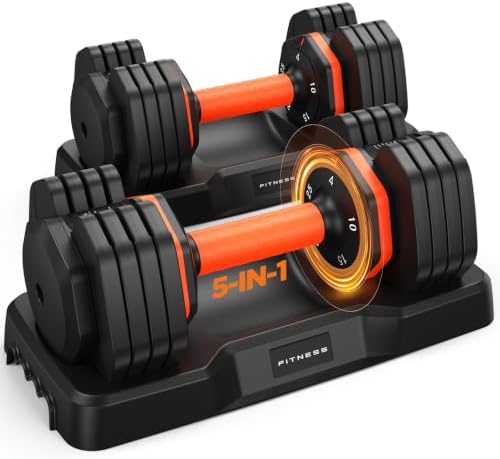
A complete home gym in one pair of dumbbells
Adjustable 5-in-1 dumbbells replace a full rack, so beginners and experienced lifters in your family can train with the same set. Strength training protects muscle while you lose fat.
3. Eat more volume
Start meals with a broth-based soup or salad, add extra vegetables to pasta, rice and eggs, and choose whole fruit over juice.
4. Cut the easy extras
- Sugary drinks, sweet coffees and alcohol
- Ultra-processed snacks eaten straight from the bag
- Large restaurant portions (box half straight away)
- Mindless evening snacking. See how to stop emotional eating at night.
5. Eat slowly and on a schedule
Eat sitting down, without screens, and pause halfway to check how full you are. Regular meal times help prevent extreme hunger and late-night grazing.
6. Check progress without counting
Self-monitoring is one of the strongest predictors of success. Weigh yourself a few times a week and look at the weekly average, and track your waist monthly. See how to track progress. If you stop losing for 3+ weeks, try counting for a week or two to spot hidden calories.
Helpful tools
These are common, inexpensive options that some people find helpful. We have not personally tested these products. Links go to Amazon search results so you can compare current options and prices.
BEST FOR PORTION GUIDANCE
Portion Control Plates
Divided plates show the plate method at a glance, making portions automatic.
Pros
- Visual guide
- No counting
- Family-friendly
Cons
- Doesn’t suit every meal
- Takes cupboard space

BEST FOR VOLUME EATING
Vegetable Spiralizer
Spiralized zucchini and other vegetables add volume to pasta dishes for few calories.
Pros
- Adds vegetables easily
- Inexpensive
- Fun to use
Cons
- Extra cleanup
- Takes practice

BEST FOR TRACKING TRENDS
Smart Scale
Weekly averages tell you if your no-counting approach is working. See our smart scale guide.
Pros
- Automatic logs
- Trends
- Body fat estimate
Cons
- Estimates
- Daily swings

BEST FOR SLOWING DOWN
Smaller Dinner Plates
Smaller plates can make normal portions look more satisfying.
Pros
- Cheap
- Easy change
- No tracking
Cons
- Evidence is mixed
- You can still go back for seconds

Keep reading
Frequently asked questions
Can you really lose weight without counting calories?
Yes. By changing food choices and portions you can create a calorie deficit without tracking, as long as you check progress regularly.
Is intuitive eating good for weight loss?
Intuitive eating focuses on hunger cues and a healthy relationship with food. It can help some people, but it isn’t primarily a weight loss method.
How fast will I lose weight without counting?
Often a little slower and less predictable than with counting, but many people find it easier to sustain.
What foods fill you up the most?
Protein-rich foods, vegetables, fruit, broth soups, beans, potatoes and oats are among the most filling per calorie.
When should I start counting calories?
If your weight hasn’t changed for 3–4 weeks, a short period of tracking can reveal hidden calories.
Sources
- Rolls BJ. Dietary energy density: applying behavioral science to weight management. Nutr Bull. 2017.
- Hall KD, et al. Ultra-processed diets cause excess calorie intake and weight gain. Cell Metab. 2019.
- Leidy HJ, et al. The role of protein in weight loss and maintenance. Am J Clin Nutr. 2015.
- Burke LE, et al. Self-monitoring in weight loss: a systematic review. J Am Diet Assoc. 2011.
This article is for general information only and is not medical advice. See our Medical Disclaimer.