
Magnesium Glycinate for Sleep: Does It Work? Best Picks on Amazon
By WellnessVigor · Updated October 14, 2026 · 8 min read
This article contains affiliate links. If you buy through them, we may earn a small commission at no extra cost to you. Learn more.
Magnesium glycinate has become one of the most popular natural sleep supplements, recommended all over social media for falling asleep faster and sleeping more deeply. But how strong is the evidence?
This guide explains what magnesium does in the body, what studies show for sleep, how much is safe, and five popular magnesium glycinate supplements to compare. It is general information, not medical advice.
Quick answer
Magnesium may modestly help some people sleep, especially older adults or those low in magnesium. A meta-analysis of three small trials in older adults found people fell asleep about 17 minutes faster with magnesium than placebo, but the evidence quality was low. Magnesium glycinate is a gentle, well-absorbed form that is less likely to cause diarrhea than some other forms. The upper limit for supplemental magnesium in adults is 350 mg a day unless a doctor advises otherwise. We have not personally tested these products.
Table of Contents
ToggleWhat magnesium does for sleep
Magnesium is involved in hundreds of processes in the body, including nerve and muscle function. It interacts with GABA, a calming brain chemical, and with NMDA receptors involved in nerve excitation, which is why it’s been studied for sleep. Many people don’t meet the recommended intake from food alone. Learn more in our magnesium supplement guide.
What the research shows
- Older adults with insomnia: in an 8-week trial in Iran, 46 older adults took 500 mg of magnesium or a placebo daily. The magnesium group had better insomnia scores, sleep efficiency, sleep time and time to fall asleep, plus higher melatonin and lower cortisol levels.
- Meta-analysis: a 2021 review pooled three trials in 151 older adults. Magnesium shortened the time to fall asleep by about 17 minutes compared with placebo; total sleep time rose by about 16 minutes, but that wasn’t statistically significant. The authors rated the evidence as low to very low quality.
Bottom line: magnesium is promising and inexpensive, but not a strong sleep aid. It may help most if your intake is low.
Why magnesium glycinate?
Magnesium comes in many forms. Magnesium glycinate (also called bisglycinate) is bound to the amino acid glycine. It is generally considered well absorbed and gentle on the stomach, while forms like magnesium citrate and oxide are more likely to have a laxative effect. Note that most sleep studies used other forms, such as magnesium oxide, so there is no direct proof glycinate works better for sleep.
Low-dose 3 mg melatonin gummies
A gentler dose for occasional sleepless nights, jet lag or getting back on schedule after the weekend.
Good to know: Avoid in pregnancy and check with your doctor if you take blood thinners, diabetes or epilepsy medicines.

Dosage and safety
- The NIH Office of Dietary Supplements sets the upper limit for supplemental magnesium at 350 mg a day for adults (food magnesium doesn’t count toward this limit).
- Check labels for elemental magnesium, not the total weight of the compound.
- Take it in the evening, 30–60 minutes before bed, if using it for sleep.
- Side effects can include diarrhea, nausea and cramping, especially at higher doses.
- People with kidney disease should not take magnesium supplements without medical advice.
- Magnesium can interact with some antibiotics, osteoporosis drugs and other medications, so ask a pharmacist.
Supplements work best on top of good sleep habits. The 14-Day Sleep Reset guide helps you build those habits step by step.
Best magnesium glycinate supplements to compare
These are popular, widely available options. We have not personally tested these products. Choose brands with third-party testing where possible, and check the elemental magnesium per serving on the current label.
BEST WIDELY AVAILABLE
Doctor’s Best High Absorption Magnesium
A long-standing, budget-friendly chelated magnesium (glycinate and lysinate) that is easy to find on Amazon.
Pros
- Affordable
- Chelated, gentle form
- Widely available
Cons
- Large tablets for some people
- Check the serving size for elemental magnesium

BEST FOR SENSITIVE USERS
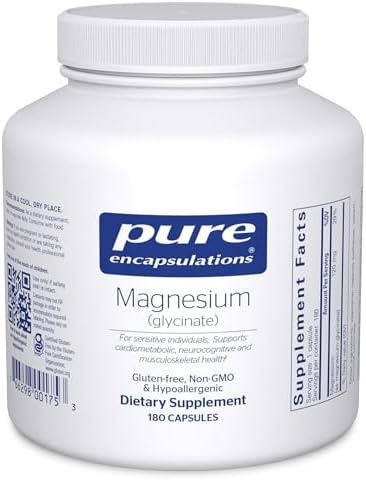
Pure Encapsulations Magnesium Glycinate
A hypoallergenic-focused brand that offers magnesium glycinate in simple capsules with minimal additives.
Pros
- Minimal additives
- Capsules easy to adjust
- Well-known brand
Cons
- Higher price per serving
- Several capsules may be needed
BEST POWDER
Thorne Magnesium Bisglycinate Powder
A powder you mix into water, useful if you dislike swallowing pills and want to adjust the dose.
Pros
- No pills
- Easy to adjust dose
- Third-party tested brand
Cons
- Some people dislike the taste
- Pricier than tablets

BEST VALUE TABLETS
NOW Foods Magnesium Glycinate
A value-focused option from a large supplement brand, available in tablets and capsules.
Pros
- Good value
- Large brand with wide distribution
- Multiple sizes
Cons
- Tablet size
- Check elemental magnesium per serving

BEST DRUGSTORE OPTION
Nature Made Magnesium Glycinate
A familiar drugstore brand, convenient if you want a simple, widely sold product.
Pros
- Easy to find
- Familiar brand
- Simple dosing
Cons
- Fewer form options
- Compare price per serving

Other ways to sleep better
Magnesium is unlikely to fix a poor sleep routine on its own. Keep a regular schedule, limit late caffeine and screens, and try a relaxation method. See the 10-3-2-1-0 sleep rule, our natural sleep aids guide and our melatonin guide.
Keep reading
Frequently asked questions
How much magnesium glycinate should I take for sleep?
Many supplements provide 100–200 mg of elemental magnesium per serving. Adults should not exceed 350 mg a day from supplements unless a doctor advises it.
When should I take magnesium glycinate for sleep?
Most people take it in the evening, about 30–60 minutes before bed.
Can I take magnesium glycinate every night?
For most healthy adults, taking it within the upper limit is considered safe. Check with a doctor if you have kidney problems or take other medications.
Is magnesium glycinate better than melatonin?
They work differently. Melatonin is a timing signal for your body clock, while magnesium supports relaxation. Neither replaces good sleep habits.
How long does magnesium take to work for sleep?
Some people notice a difference within days, but studies typically lasted several weeks. If you see no benefit after a few weeks, it may not be the right fit for you.
Sources
- Abbasi B, et al. The effect of magnesium supplementation on primary insomnia in elderly: a double-blind placebo-controlled clinical trial. J Res Med Sci. 2012.
- Mah J, Pitre T. Oral magnesium supplementation for insomnia in older adults: a systematic review and meta-analysis. BMC Complement Med Ther. 2021.
- NIH Office of Dietary Supplements. Magnesium fact sheet for health professionals.
This article is for general information only and is not medical advice. See our Medical Disclaimer.