
Standing Exercises for Love Handles at Home (No Equipment)
By WellnessVigor · Updated October 12, 2026 · 8 min read
This article contains affiliate links. If you buy through them, we may earn a small commission at no extra cost to you. Learn more.
Love handles are the soft areas of fat that sit just above the hips on each side of the waist. They are one of the most common things people want to change, and also one of the slowest areas to shift.
This guide gives you six standing exercises that work the obliques and the rest of your core, each with a picture of the start and finish position. Just as importantly, it explains what actually reduces fat at the waist, so your effort goes where it counts.
Quick answer
Do standing side bends, standing twists, standing side crunches, cross-body crunches, wood chops and step jacks for 2–3 rounds of 30–40 seconds each, 3–4 times a week. These moves strengthen the obliques and core, but love handles shrink through overall fat loss: a small calorie deficit, enough protein, daily walking and good sleep.
Table of Contents
ToggleCan exercises get rid of love handles?
Exercises alone can’t remove fat from one spot. Love handles are mostly subcutaneous fat (the fat under the skin), and your body decides where it loses fat from first. In one study, six weeks of ab exercises five days a week improved ab endurance but did not reduce belly fat or waist size. In another, 12 weeks of training only one leg reduced total body fat, but mostly from the upper body and trunk rather than the trained leg.
What exercise can do is strengthen the obliques and core, improve your posture and add to the calories you burn. A large review found that regular resistance training lowered body fat percentage and visceral fat compared with not exercising, and aerobic exercise has clear evidence for reducing visceral fat. Put together with a calorie deficit, that’s how the waist gets smaller. If progress has stalled, see how to break a weight loss plateau.
How to do this routine
- Warm up: 2–3 minutes of marching in place and gentle torso turns.
- Work: 30–40 seconds per move (or 10–15 reps per side), resting 15–30 seconds between moves.
- Rounds: 2 rounds for beginners, building to 3.
- How often: 3–4 times a week, plus walking on most days.
- Form: move with control. Twisting and bending fast doesn’t make the moves more effective and can strain your back.
1. Standing side bend
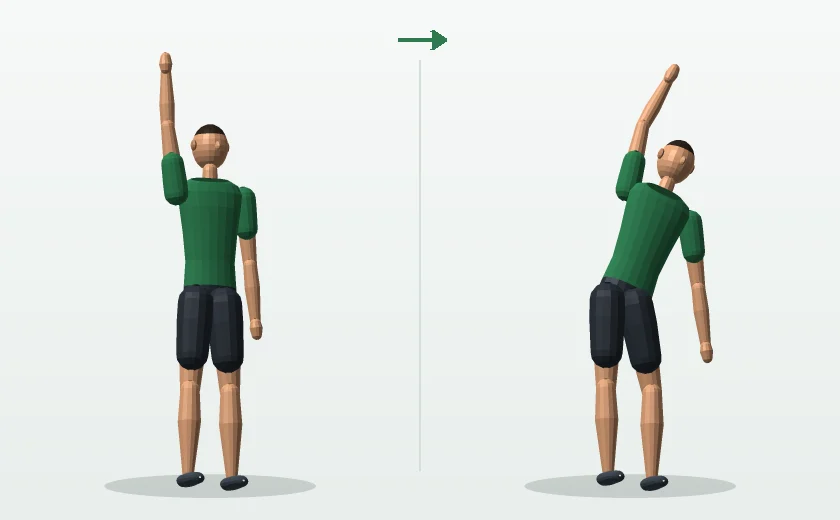
Works the obliques and the muscles along the side of the spine through a long, controlled range.
- Stand with your feet a little wider than hip-width.
- Reach one arm overhead and rest the other hand on your thigh.
- Bend slowly to the side, sliding your lower hand down your leg.
- Return to center and switch sides.
Harder: hold a light dumbbell or kettlebell in the lower hand.
One exercise bike, and the whole family gets fitter
Skip the gym fees and the commute. A quiet magnetic bike lets everyone at home ride while watching TV, in any weather. Twenty to thirty minutes a day adds up to real calories burned.

2. Standing torso twist
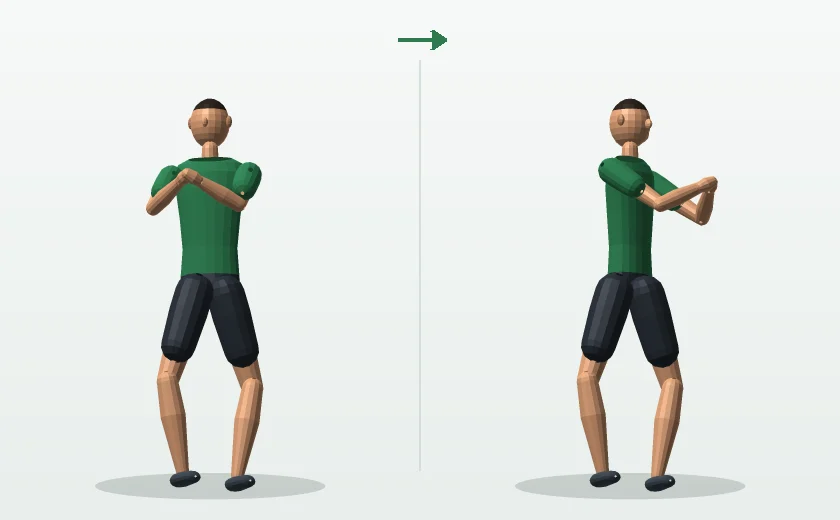
Trains the rotation muscles of your core while your hips stay stable.
- Stand with your feet hip-width apart and knees slightly bent.
- Bring your hands together in front of your chest, elbows lifted.
- Rotate your upper body to one side, keeping your hips facing forward.
- Return through center and rotate to the other side.
Tip: think of turning from your ribcage, not swinging your arms.
3. Standing side crunch
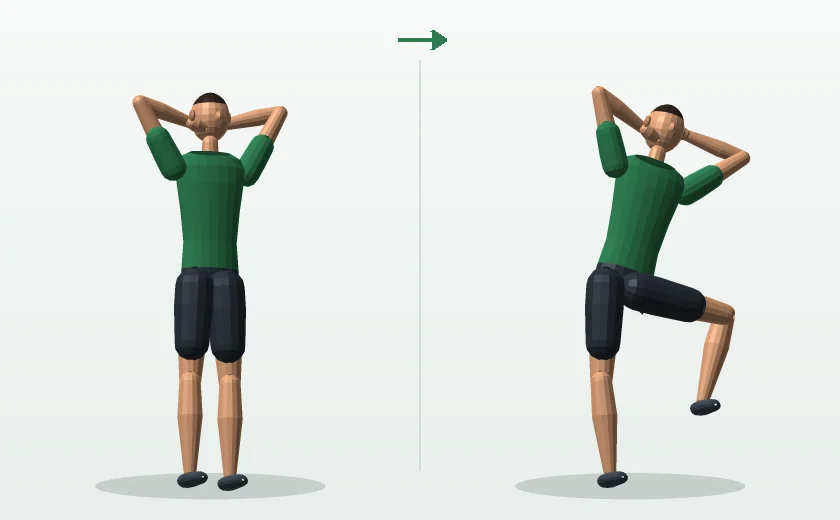
Brings the knee and elbow together on the same side to squeeze the obliques.
- Stand tall with your hands lightly behind your head.
- Lift your right knee out to the side as you bend your torso to bring your right elbow toward it.
- Lower and repeat for all reps, then switch sides.
- Keep your neck relaxed and avoid pulling on your head.
4. Standing cross-body crunch
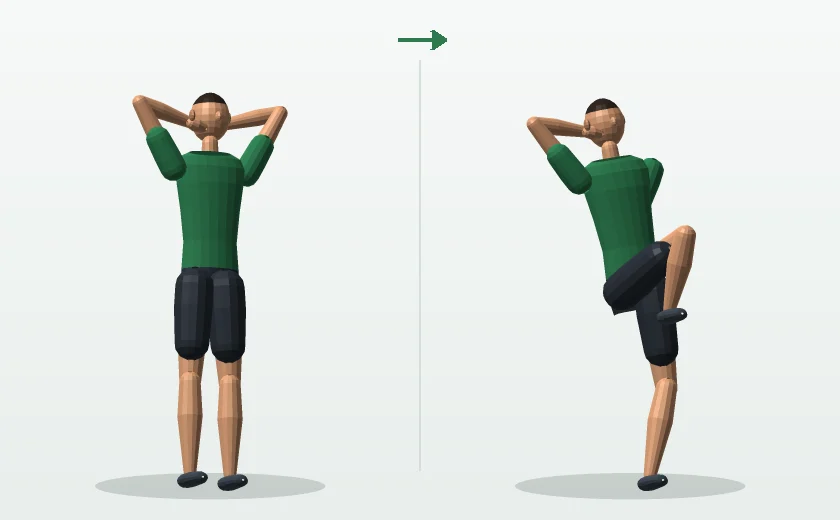
A rotational crunch that works the obliques and lower abs together.
- Stand with your hands behind your head, elbows wide.
- Lift your left knee and twist to bring your right elbow toward it.
- Return to standing and repeat on the other side.
- Go at a steady pace and keep your standing leg slightly bent.
5. Standing wood chop
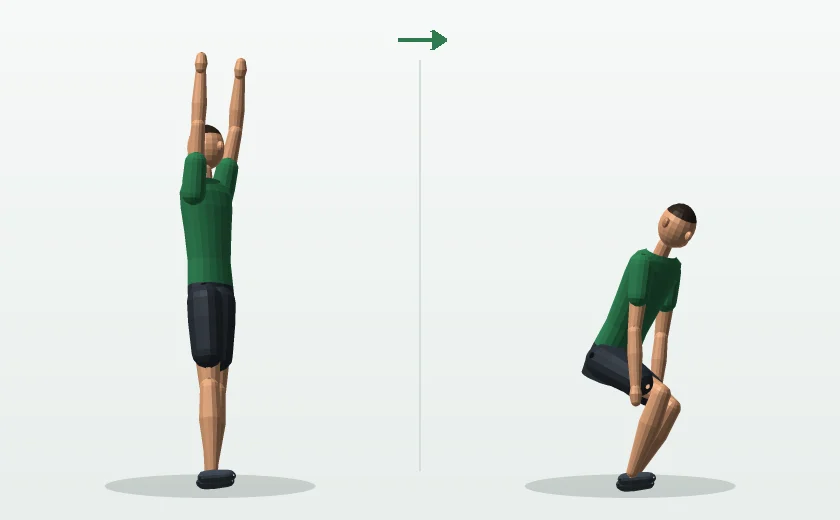
A powerful full-body move that links the legs, core and shoulders.
- Stand with your feet hip-width apart, hands clasped overhead.
- Bend your knees and hinge at the hips as you bring your hands down toward your knees.
- Drive back up and reach overhead again.
- For more oblique work, chop diagonally from one shoulder toward the opposite knee.
6. Step jack (cardio finisher)
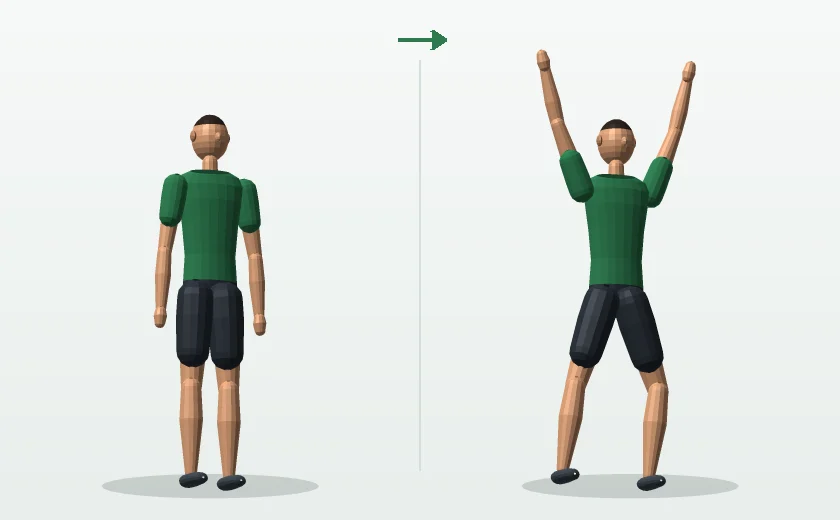
A low-impact cardio move that raises your heart rate at the end of each round.
- Stand with your feet together, arms by your sides.
- Step one foot out as you raise your arms overhead.
- Step back and lower your arms.
- Alternate sides at a brisk pace.
A 15-minute love handle routine
- Warm-up: 2 minutes of marching in place.
- Standing side bend: 40 seconds (20 per side)
- Standing torso twist: 40 seconds
- Standing side crunch: 40 seconds (20 per side)
- Standing cross-body crunch: 40 seconds
- Wood chop: 40 seconds
- Step jack: 40 seconds
- Rest 1 minute, then repeat for 2–3 rounds.
- Cool-down: 1 minute of slow marching and side stretches.
Want a full-body version? Combine this with our standing thigh exercises on alternate days.
Need a complete plan for losing fat around the waist? 35 Days to a Leaner You combines a 35-day low-carb meal plan with simple home workouts, so the eating part is planned for you too.
Optional equipment to make it harder
Bodyweight is enough to start. When the routine feels easy, these are common, inexpensive ways to add challenge. We have not personally tested these products. Links go to Amazon search results so you can compare current options and prices.
BEST FOR WOOD CHOPS AND TWISTS
Light Medicine Ball
Holding a light medicine ball (around 4–8 lb) during twists and wood chops makes your core work harder without changing the movement.
Pros
- Adds resistance to rotational moves
- Easy to grip and hold
- Durable and simple
Cons
- Choose a light ball for twisting moves
- Some balls bounce, others don’t, so check the type

BEST FOR CABLE-STYLE CHOPS
Resistance Bands with Handles and Door Anchor
With a door anchor, resistance bands let you do cable-style wood chops and twists at home, adding resistance through the whole movement.
Pros
- Mimics gym cable machines
- Several resistance levels
- Packs away easily
Cons
- Door anchor must be fitted securely
- Bands wear out and need replacing

BEST FOR WEIGHTED SIDE BENDS
Kettlebell
A single kettlebell held in one hand turns side bends into a stronger oblique exercise and can also be used for squats and carries.
Pros
- Very versatile
- Compact and durable
- Good for one-sided core work
Cons
- Start light for side bends
- Fixed weight, so you may need more than one

BEST FOR TRACKING PROGRESS
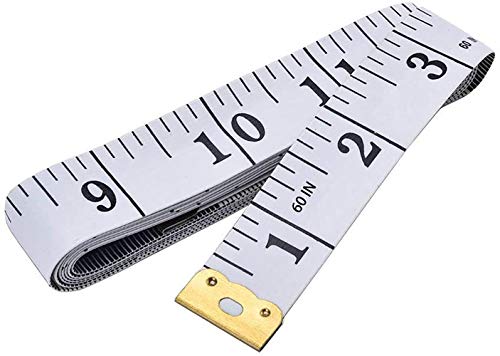
Body Tape Measure
A retractable body tape measure makes it easy to track your waist each week, which often shows progress before the scale does.
Pros
- Very cheap
- Easy to use on your own
- More useful than the scale for waist changes
Cons
- Measure at the same spot each time for accuracy
- Doesn’t track weight
What actually shrinks love handles
- A small, steady calorie deficit: the main driver of fat loss anywhere. See why you might not be losing weight in a deficit.
- Protein at each meal: helps you stay full and keep muscle. Here’s how much protein you need.
- Daily walking: see how many steps a day to aim for.
- Sleep and stress: poor sleep and long-term stress make cravings and belly fat harder to control. Read how poor sleep affects weight and how to lower cortisol naturally.
- Measure your waist: check it once a week at the same spot. It often changes before the scale does.
Keep reading
Frequently asked questions
How long does it take to lose love handles?
It depends on how much fat you have to lose and how consistent you are. Many people need a few months of a steady calorie deficit and regular exercise to see a clear change at the sides of the waist.
Are side bends bad for your back?
Slow, controlled side bends are fine for most people. Avoid bouncing or using very heavy weights, and skip the move if it causes back pain.
Can I do love handle exercises every day?
These standing moves are low impact, so many people can do them most days. Take a rest day if your core or back feels sore.
Why are love handles so hard to lose?
Fat distribution is strongly influenced by genetics, sex, age and hormones, and the sides of the waist are often among the last places to lean out. Patience and consistent habits matter more than any single exercise.
Will oblique exercises make my waist wider?
Bodyweight oblique moves strengthen the muscles but are very unlikely to add noticeable width. Very heavy, high-volume oblique training is a different story, but that isn’t what this routine involves.
Sources
- Vispute SS, et al. The effect of abdominal exercise on abdominal fat. J Strength Cond Res. 2011.
- Ramírez-Campillo R, et al. Regional fat changes induced by localized muscle endurance resistance training. J Strength Cond Res. 2013.
- Wewege MA, et al. The effect of resistance training in healthy adults on body fat percentage, fat mass and visceral fat: a systematic review and meta-analysis. Sports Med. 2022.
- Ismail I, et al. A systematic review and meta-analysis of the effect of aerobic vs. resistance exercise training on visceral fat. Obes Rev. 2012.
This article is for general information only and is not medical advice. See our Medical Disclaimer.