
Dumbbell Exercises for Fat Loss at Home: A Beginner Full-Body Routine
By WellnessVigor · Updated October 12, 2026 · 9 min read
This article contains affiliate links. If you buy through them, we may earn a small commission at no extra cost to you. Learn more.
A pair of dumbbells is one of the most useful things you can own for losing fat at home. With just six moves you can train every major muscle group in about 25 minutes, without a gym membership.
This guide explains how strength training helps with fat loss, then walks you through a beginner full-body dumbbell routine. Each exercise has a picture showing the start and finish position.
Quick answer
Do dumbbell squats, Romanian deadlifts, bent-over rows, overhead presses, reverse lunges and biceps curls as a circuit: 2–3 rounds of 8–12 reps, 2–3 times a week. Choose a weight where the last two reps feel hard but your form stays clean. Research shows resistance training reduces body fat percentage and visceral fat, and it works best combined with daily walking and a small calorie deficit.
Table of Contents
ToggleDo dumbbell workouts help you lose fat?
Yes. A 2022 review of 58 randomized trials found that full-body resistance training, compared with no exercise, reduced body fat percentage by about 1.5 percentage points, fat mass by about half a kilogram and visceral (deep belly) fat as well, even without a diet program. A separate review of strength training research reported that about 10 weeks of training can add around 1.4 kg of lean weight and raise resting metabolic rate by roughly 7%.
Strength training is not a replacement for cardio, though. A meta-analysis on visceral fat found that aerobic exercise had a clearer effect than resistance training alone. The best plan for most people combines both: lift 2–3 times a week and walk on most days. See how many steps a day help with weight loss.
How to use this routine
- Warm up for 5 minutes: march in place, then do a few bodyweight squats and arm circles.
- Format: do the six exercises back to back as a circuit, resting 30–60 seconds between moves and 1–2 minutes between rounds.
- Sets and reps: beginners start with 2 rounds of 8–12 reps; build to 3 rounds.
- Weight: pick a weight where the last 2 reps are hard but your form doesn’t break down. Many beginners start with 5–15 lb (2–7 kg) per hand, depending on the move.
- Frequency: 2–3 non-consecutive days a week, in line with the US recommendation of muscle strengthening at least 2 days a week.
1. Dumbbell squat
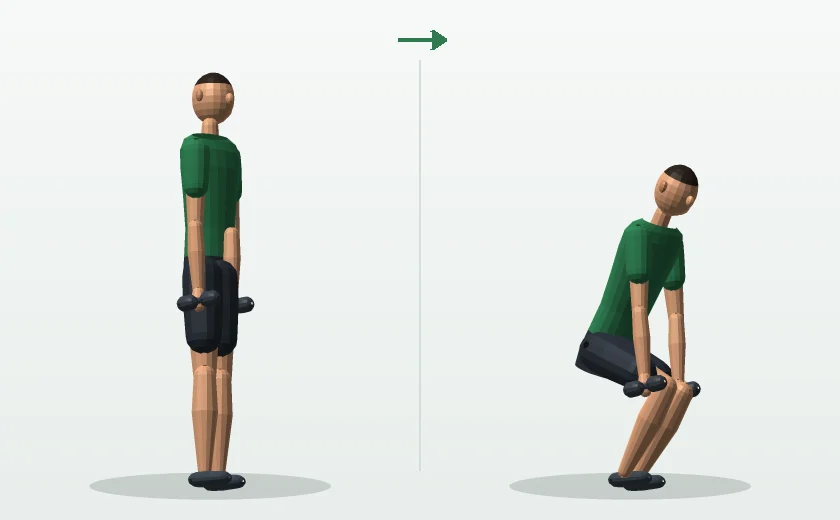
Works the quads, glutes and core, the biggest muscles in your body.
- Stand with your feet about shoulder-width apart, a dumbbell in each hand by your sides.
- Push your hips back and bend your knees, keeping your chest up.
- Lower until your thighs are about parallel to the floor or as deep as is comfortable.
- Press through your heels to stand.
Tip: keep your knees tracking over your toes and your heels on the floor.
One exercise bike, and the whole family gets fitter
Skip the gym fees and the commute. A quiet magnetic bike lets everyone at home ride while watching TV, in any weather. Twenty to thirty minutes a day adds up to real calories burned.

2. Dumbbell Romanian deadlift
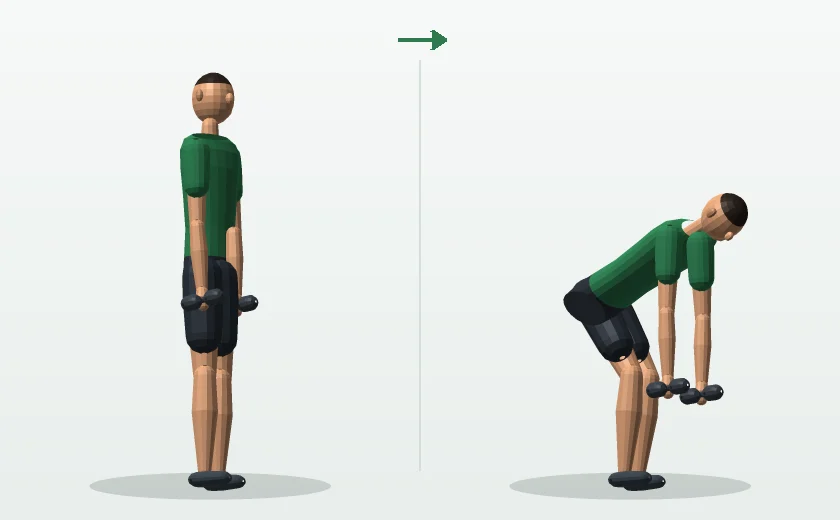
Works the hamstrings, glutes and lower back and teaches the hip hinge, a key movement for lifting things safely.
- Stand tall with the dumbbells in front of your thighs and your knees slightly bent.
- Push your hips back and lower the weights along your legs, keeping your back flat.
- Stop when you feel a stretch in your hamstrings, usually around mid-shin.
- Squeeze your glutes and drive your hips forward to stand.
Tip: this is a hip movement, not a back movement. If your back rounds, reduce the range or the weight.
3. Dumbbell bent-over row
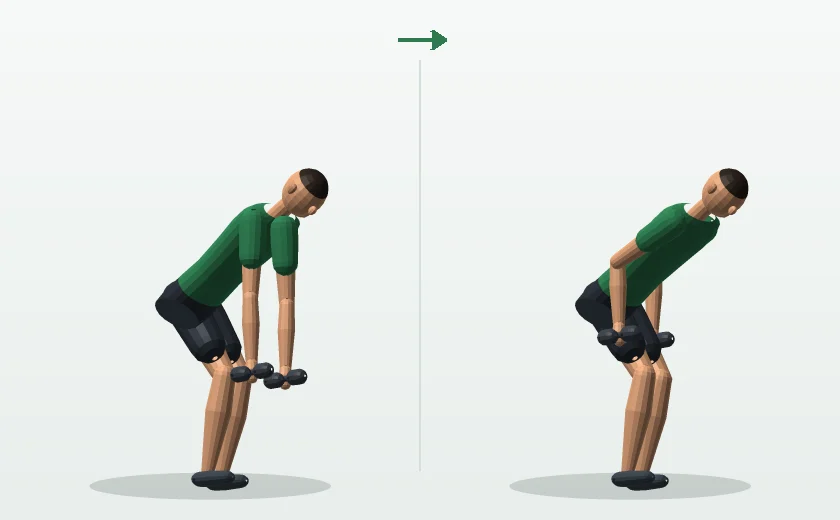
Works the upper back, the back of the shoulders and the biceps, and helps balance out lots of sitting.
- Hinge forward at the hips with a flat back and soft knees, arms hanging straight.
- Pull the dumbbells toward your lower ribs, leading with your elbows.
- Squeeze your shoulder blades together at the top.
- Lower slowly.
Tip: if your lower back gets tired, rest one hand on a chair and row one arm at a time.
4. Dumbbell overhead press
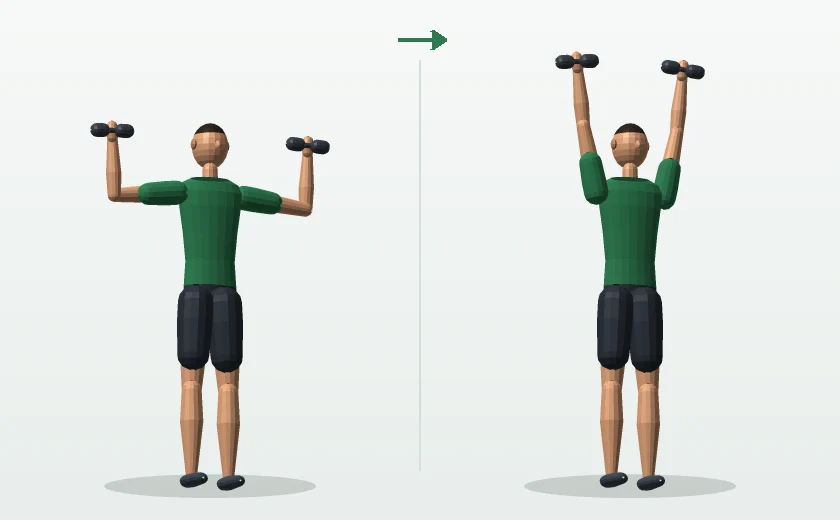
Works the shoulders and triceps and trains your core to keep you steady.
- Stand with your feet hip-width apart, dumbbells at shoulder height.
- Brace your core and press the weights straight overhead.
- Finish with your arms by your ears, without arching your lower back.
- Lower the weights back to your shoulders with control.
Tip: sit on a sturdy chair or bench if you find yourself leaning back.
5. Dumbbell reverse lunge
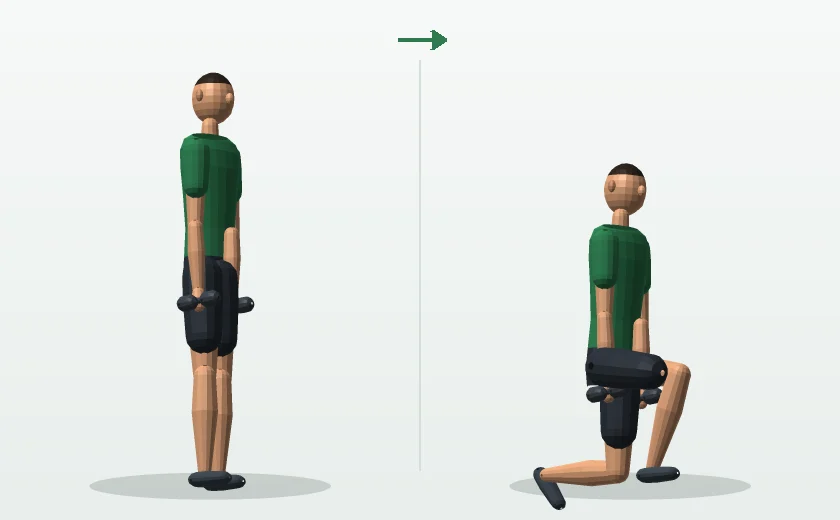
Works the legs and glutes one side at a time and improves balance.
- Stand tall with a dumbbell in each hand.
- Step one foot back and lower your back knee toward the floor.
- Keep most of your weight on your front heel.
- Push through your front foot to return. Alternate legs.
Tip: start without weights until your balance feels steady.
6. Dumbbell biceps curl
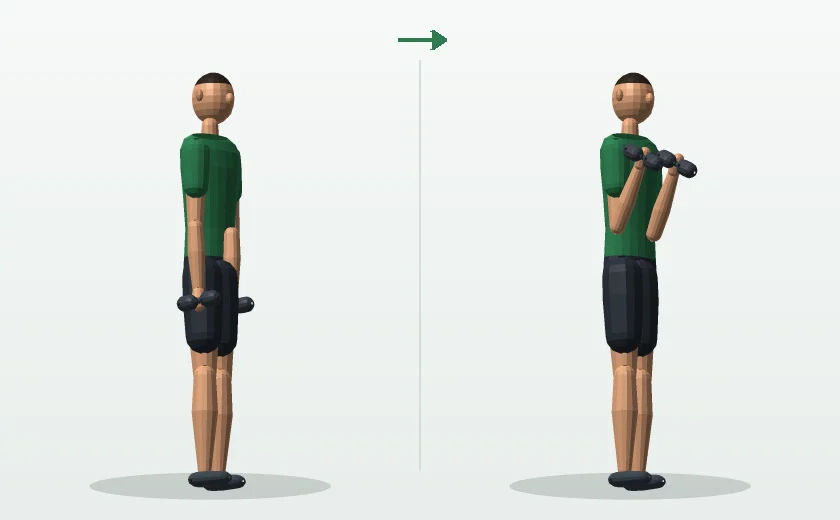
A simple arm finisher that also builds grip strength.
- Stand tall with the dumbbells by your sides, palms facing forward.
- Keep your elbows close to your body and curl the weights up toward your shoulders.
- Squeeze at the top, then lower slowly.
- Avoid swinging your body to lift the weight.
A simple weekly dumbbell plan for fat loss
- Monday: dumbbell circuit (2–3 rounds)
- Tuesday: 30–45 minute walk
- Wednesday: dumbbell circuit
- Thursday: walk or light cardio
- Friday: dumbbell circuit
- Weekend: one longer walk and one rest day
How to progress: when you can do 12 clean reps on every set, add 1–2 reps or move up to slightly heavier dumbbells. Small, steady increases matter more than big jumps.
Feeling sore after your first sessions is normal. Here’s why muscles hurt after a new workout and what helps.
Want your workouts and meals planned for you? 35 Days to a Leaner You pairs a 35-day low-carb meal plan with simple home workouts, so you always know what to do next.
Best dumbbells and gear for a home setup
You only need one or two pairs of dumbbells to start. We have not personally tested these products. The options below are common types with what to check before you buy, and the links go to Amazon search results so you can compare current prices.
BEST OVERALL FOR HOME
Adjustable Dumbbells
One adjustable pair replaces a whole rack of fixed weights, so you can go light for presses and heavier for squats and deadlifts as you get stronger.
Pros
- Saves space compared with a full set
- Quick weight changes on many models
- Lets you progress for years
Cons
- Higher upfront cost
- Bulkier handles than fixed dumbbells on some models

BEST DURABLE FIXED WEIGHTS
Rubber Hex Dumbbells
Hex dumbbells don’t roll away, and the rubber coating protects floors. Buying two or three pairs (for example light, medium and heavy) covers this whole routine.
Pros
- Very durable and simple
- Won’t roll on the floor
- Easy to grab for quick circuits
Cons
- Several pairs take up space
- Cost adds up as you buy heavier pairs

BEST FOR BEGINNERS
Neoprene Dumbbell Set with Stand
Light, coated dumbbells (often 3–15 lb) are a good start for shoulder presses, curls and anyone new to lifting.
Pros
- Comfortable grip coating
- Often sold with a compact stand
- Inexpensive
Cons
- Too light for squats and deadlifts as you progress
- Coating can wear over time

BEST ADD-ON
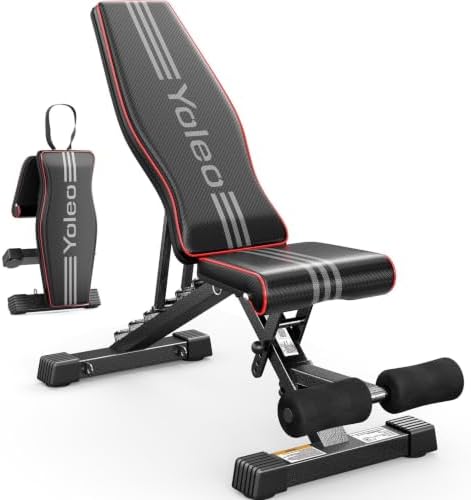
Adjustable Weight Bench
A bench is optional, but it lets you do seated presses, supported rows and step-ups, and makes the routine easier on your lower back.
Pros
- Adds many more exercise options
- Supports seated and incline moves
- Many models fold for storage
Cons
- Takes up floor space
- Check the weight capacity and stability
Fat-loss tips that make your workouts count
- Eat enough protein so your body keeps muscle while losing fat. See how much protein you need to lose weight.
- Keep a small calorie deficit rather than a crash diet, which makes workouts harder and muscle loss more likely.
- Walk daily on non-lifting days.
- Track more than the scale: strength training can change your shape before your weight drops much. A smart scale with body fat readings and a tape measure help.
- Sleep 7–9 hours: recovery and appetite control both depend on it.
Keep reading
Frequently asked questions
What weight dumbbells should a beginner start with?
It depends on the exercise. Many beginners use lighter dumbbells for presses and curls and heavier ones for squats and deadlifts. Choose a weight that makes the last two reps of a set of 8–12 feel hard while your form stays good.
Is it better to do cardio or dumbbells for fat loss?
Both help in different ways. Cardio burns more calories during the session and has clearer evidence for reducing visceral fat, while strength training builds and keeps muscle and also lowers body fat. Combining them works best.
Can dumbbell exercises burn belly fat?
They help reduce overall body fat, including visceral belly fat, but no exercise targets belly fat specifically. Diet, daily movement and sleep make the biggest difference to where you see change.
Will lifting dumbbells make me bulky?
Unlikely. Building a lot of muscle takes heavy training, a calorie surplus and years of consistency. In a calorie deficit, dumbbell training mainly helps you keep muscle and look firmer as you lose fat.
How many days a week should I lift weights to lose fat?
Two to three full-body sessions a week is enough for most beginners. Leave a rest day between sessions and walk on the other days.
Sources
- Wewege MA, et al. The effect of resistance training in healthy adults on body fat percentage, fat mass and visceral fat: a systematic review and meta-analysis. Sports Med. 2022.
- Westcott WL. Resistance training is medicine: effects of strength training on health. Curr Sports Med Rep. 2012.
- Ismail I, et al. A systematic review and meta-analysis of the effect of aerobic vs. resistance exercise training on visceral fat. Obes Rev. 2012.
- ODPHP. Top 10 things to know about the second edition of the Physical Activity Guidelines for Americans.
This article is for general information only and is not medical advice. See our Medical Disclaimer.