
Why Do My Muscles Hurt After Working Out for the First Time?
By WellnessVigor · Updated October 12, 2026 · 7 min read
You finally did your first workout in months, felt fine afterwards, and then woke up the next day (or the day after) barely able to walk down the stairs. Sitting down hurts. Lifting your arms hurts. Did you injure yourself?
Almost certainly not. This is called delayed onset muscle soreness (DOMS), and it is a normal response when your muscles do something new. Here is why it happens, how long it lasts, what helps, and when pain is a warning sign.
Quick answer
Soreness after a first workout is usually DOMS: tiny, harmless damage to muscle fibers from unfamiliar effort, especially lowering movements like squats, lunges and walking downhill. It starts 12 to 24 hours after exercise, peaks at 24 to 72 hours, and fades in 3 to 5 days. Gentle movement, walking, sleep and protein help you feel better. Seek medical help for severe pain, major swelling or dark (cola-colored) urine.
Table of Contents
ToggleWhat causes muscle soreness after exercise?
According to the American College of Sports Medicine (ACSM), DOMS is believed to come from microscopic damage to muscle fibers when they face unfamiliar stress. The soreness is part of the repair process. It is not caused by lactic acid, which clears from the muscles within an hour or so after exercise.
Soreness is strongest after eccentric movements, where a muscle lengthens under load, such as:
- Lowering into a squat or lunge
- Walking or jogging downhill
- The lowering phase of a bicep curl
- Step aerobics and jumping
Why the first workout hurts the most
Your muscles adapt quickly. After one bout of a new exercise, they are partly protected for weeks, a process known as the repeated bout effect. That is why the first week of a new program hurts far more than the fourth. Doing too much too soon, such as a long first session or lots of new exercises, makes soreness worse.
How long does DOMS last?
- Starts: 12 to 24 hours after exercise
- Peaks: 24 to 72 hours after
- Fades: usually within 3 to 5 days
Common symptoms include tender muscles, stiffness, mild swelling and temporary loss of strength.
Want a beginner-friendly plan that builds up gradually so you are not too sore to continue? 35 Days to a Leaner You eases you in step by step.
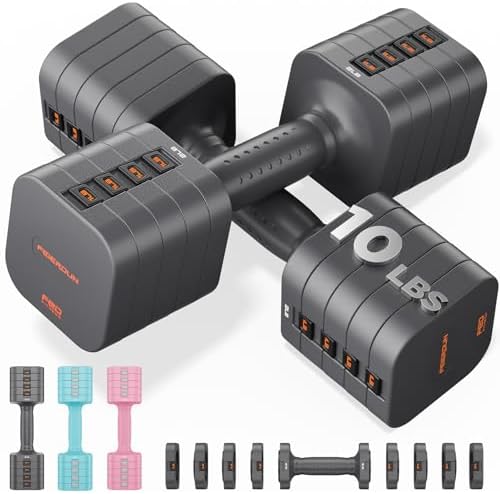
Light adjustable dumbbells for easy home workouts
A compact 5-in-1 set is perfect for beginners: switch weights in seconds and follow simple routines in your living room.
What helps sore muscles feel better
- Keep moving gently. Light walking, cycling or easy stretching increases blood flow and often eases stiffness.
- Massage or foam rolling. These can reduce how sore you feel. See massage gun vs foam roller.
- Sleep well. Muscle repair happens during sleep.
- Eat enough protein. See how much protein you need.
- Warm bath or shower for comfort.
- Pain relievers such as paracetamol can ease discomfort; ask a pharmacist if you are unsure what is safe for you.
ACSM notes these may ease symptoms, but there is little evidence that any of them speed up actual recovery.
Should you exercise when you are sore?
Light activity is generally fine and may help. Avoid hard training of the same very sore muscles until the worst soreness passes. If moving is too painful, rest for a day or two and start again gently. Walking is a great option. See walking for weight loss.
How to prevent bad soreness next time
- Start small: fewer sets, lighter weights and shorter sessions for the first 2 weeks.
- Increase gradually: add about 10% more each week.
- Repeat the same exercises: soreness drops quickly once your body adapts.
- Warm up for comfort, although research shows warm-ups and stretching do little to prevent DOMS.
When muscle pain is a warning sign
Get medical help straight away if you have:
- Dark brown or cola-colored urine
- Severe pain that is out of proportion to the workout
- Major swelling or a muscle that feels very hard
- Weakness that makes it hard to move
These can be signs of rhabdomyolysis, a rare but serious breakdown of muscle that can harm the kidneys. Also see a doctor for sharp pain during exercise, joint pain or pain that does not improve after a week, as these may be injuries rather than DOMS.
Keep reading
Frequently asked questions
Is it good to be sore after a workout?
How long does muscle soreness last for beginners?
Does lactic acid cause muscle soreness?
Should I stretch when I am sore?
When should I worry about muscle pain after exercise?
Sources
This article is for general information only and is not medical advice. See our Medical Disclaimer.