
In the world of holistic health and Ayurveda, there is an age-old wisdom regarding the preservation of vital energy. Dr. Nihar Ranjan, a renowned figure in Ayurvedic studies, once emphasized a crucial point: “Preserve your essence.” His discussion centered on the idea that for long-term health and peak physical performance, one should avoid excessive ejaculation and frequent sexual exhaustion.
Modern science actually backs a lot of this traditional wisdom, specifically through the lens of Testosterone. For men, testosterone is much more than just a “sex hormone.” It is the fuel for manhood, governing muscle mass, bone density, mental focus, stamina, and emotional well-being.
If you’ve been feeling sluggish, noticing a dip in confidence, or struggling to see results at the gym, your testosterone levels might be the culprit. Here is a comprehensive guide on how to naturally optimize and maintain this vital hormone through diet, lifestyle, and discipline.
Why Testosterone is Your Superpower
Before we dive into the food list, it’s important to understand what is at stake. When your testosterone levels are optimal, you experience:
- Physical Strength: Enhanced protein synthesis for muscle growth.
- Mental Clarity: Improved focus and a reduced risk of brain fog.
- Emotional Stability: Higher confidence and lower rates of irritability or depression.
- Metabolic Health: Easier fat loss, especially around the midsection.
When levels drop, men often face fatigue, weight gain, and a loss of “drive” in both professional and personal life.
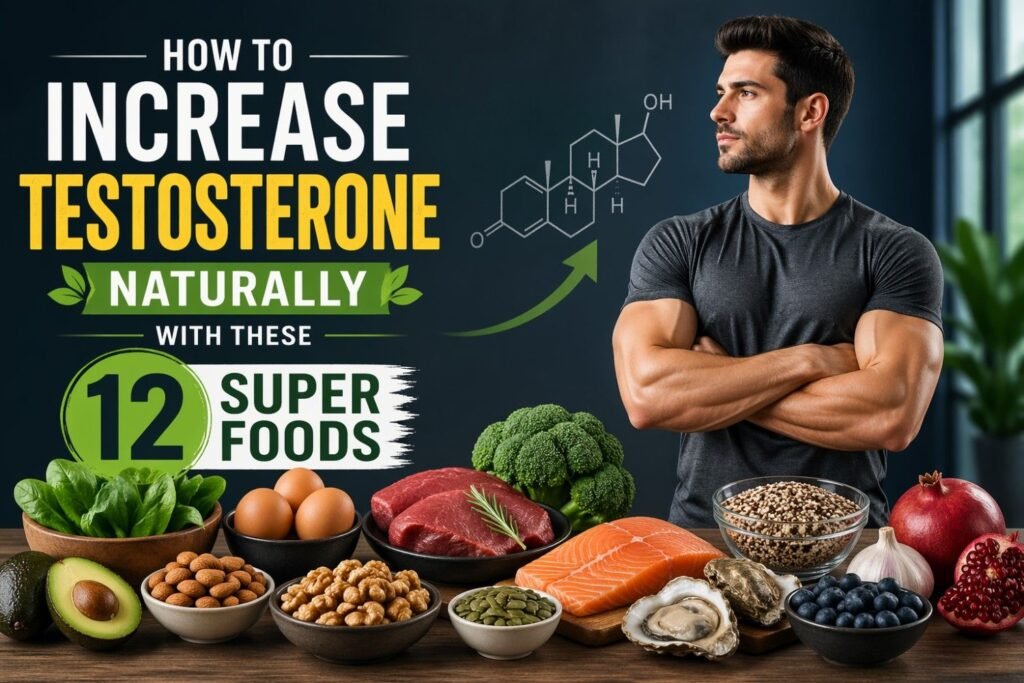
Top 12 Foods to Supercharge Your Testosterone
Diet is the foundation of hormonal health. Here are twelve power-foods and how to incorporate them into your daily routine:
1. Bananas (The Energy Catalyst)
Bananas contain an enzyme called Bromelain, which is linked to boosting testosterone levels. They are also rich in potassium and B vitamins.
- How much: 1–2 bananas daily.
- Best time: Pre-workout or as a morning snack for sustained energy.
2. Eggs (The Hormone Building Blocks)
The yolk is where the magic happens. It contains Vitamin D and healthy cholesterol—the literal precursor to testosterone production.
- How much: 2–3 whole eggs per day.
- Note: Don’t skip the yolk; that’s where the nutrients live!
3. Grass-Fed Beef (The Mineral Powerhouse)
Beef is loaded with Zinc and saturated fats, both of which are essential for male hormonal balance.
- How much: 100–150 grams, 2–3 times a week.
- Tip: Stick to lean cuts and ensure it is organic or grass-fed whenever possible.
4. Tuna (Vitamin D Source)
Vitamin D is a “pro-hormone.” Research shows that men with Vitamin D deficiency almost always have low testosterone.
- How much: One serving (approx. 100g) twice a week.
- Caution: Avoid overconsumption to limit mercury intake.
5. Honey (The Natural Enhancer)
Honey contains Boron, a mineral that helps the body use testosterone more effectively. It also contains nitric oxide, which improves blood flow.
- How much: 1–2 tablespoons daily.
- How to take: Mix it with warm water or drizzle over oats.
6. Garlic (The Cortisol Killer)
Garlic contains Allicin, a compound that lowers cortisol (the stress hormone). Since cortisol and testosterone have an inverse relationship, lower stress means higher “T.”
- How much: 1–2 raw cloves daily.
- Tip: Crush it and let it sit for 5 minutes before eating to activate the allicin.
7. Ginger (The Fertility Booster)
Studies have shown that regular ginger intake can increase testosterone levels and improve sperm health by reducing oxidative stress.
- How much: A 1-inch piece of fresh ginger daily.
- How to take: Brew it as tea or add it to your cooking.
8. Cashews & Nuts (Healthy Fats)
Cashews and walnuts provide monounsaturated fats and minerals like Magnesium and Zinc.
- How much: A small handful (approx. 30g) daily.
- Best choice: Raw or dry-roasted (avoid salted or fried versions).
9. Oysters (The King of Zinc)
Oysters contain more Zinc per serving than any other food. Zinc deficiency is a leading cause of low testosterone in men.
- How much: 2–3 oysters once a week is usually sufficient.
10. Pomegranate (The Blood Flow Specialist)
Pomegranates are packed with antioxidants that support heart health and improve blood circulation, which is vital for sexual health.
- How much: 1 glass of fresh juice or 1 whole fruit daily.
11. Spinach (Magnesium Rich)
Magnesium prevents testosterone from binding to proteins, making more “Free Testosterone” available for your body to use.
- How much: 1 cup of cooked spinach daily.
12. Extra Virgin Olive Oil (The Liquid Gold)
Olive oil helps the Leydig cells in the testes absorb more cholesterol and convert it into testosterone.
- How much: 1–2 tablespoons daily as a dressing or for low-heat cooking.
The Three Pillars of Lifestyle
Eating right is only 50% of the battle. To truly “hold onto” your essence and keep your hormones peaking, you must master these three areas:
I. The Power of Sleep (6–8 Hours)
Your body produces the majority of its testosterone while you sleep, specifically during the REM cycle.
- The Golden Window: Aim to be in bed by 10:30 PM. The hours of sleep before midnight are twice as restorative for the endocrine system.
- Duration: 7 hours is the “sweet spot.” Sleeping less than 5 hours can drop your testosterone levels by as much as 15% in just one week.
II. Resistance Training (Weight Lifting)
While cardio is great for the heart, Weight Training is the king of testosterone.
- Focus: Compound movements like squats, deadlifts, and bench presses. These movements recruit large muscle groups, triggering a massive hormonal response.
- Frequency: 3–4 times a week for 45–60 minutes. Avoid overtraining, as excessive exercise without recovery spikes cortisol.
III. Vitamin D and Sunlight
Sunlight isn’t just for plants; it’s a human requirement.
- The Routine: Spend 20–30 minutes in direct sunlight daily, ideally in the morning. This naturally boosts Vitamin D3, which acts as a switch for testosterone production.
Final Thoughts: Mental Peace and Discipline
As Dr. Nihar Ranjan suggested, “preservation” is key. High stress and constant mental agitation drain your body’s resources. Practice mindfulness, keep your stress levels low, and follow a disciplined routine.
By combining these nutrient-dense foods with consistent sleep and heavy lifting, you aren’t just improving your lab results—you are reclaiming your vitality, your strength, and your edge.
Tested and handpicked tools to help you stay active from the comfort of your home.
Restore your body’s natural balance. [Shop our pain relief and recovery collection]