
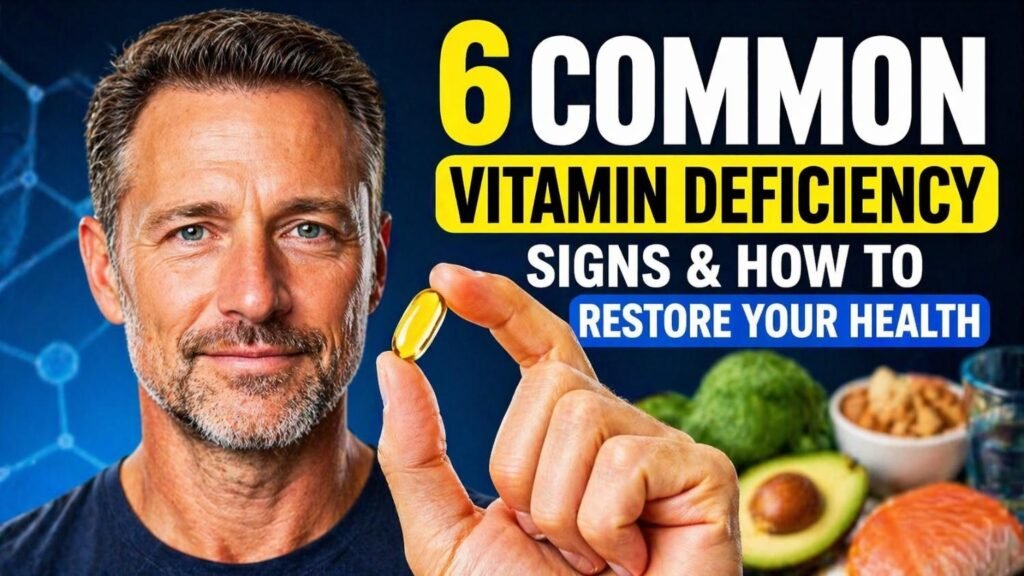
Nourish Your Body, Feel Your Best
We often push through our busy days ignoring the subtle whispers of our bodies. A little extra fatigue here, a lingering cold there—we usually chalk it up to stress or a lack of sleep. However, these “whispers” are often your body’s way of signaling a nutritional gap.
Vitamins and minerals are the spark plugs of our biological engine. When they run low, things start to misfire. Understanding these 6 key vitamin deficiency signs is the first step toward reclaiming your energy and vitality.
1. Vitamin D: The Sunshine Vitamin
Vitamin D acts more like a hormone than a vitamin, influencing everything from bone density to immune response. Because modern life keeps us indoors, deficiency is a global epidemic.
- The Signs: Deep bone pain, persistent muscle weakness, fatigue, and a “low” mood. If you find yourself catching every cold that goes around the office, your Vitamin D might be low.
- The Importance: It is the primary regulator for calcium absorption. Without it, your bones become brittle, and your immune system loses its “shield.”
- How to Fix It: Aim for 15–20 minutes of midday sun exposure. Diet-wise, lean on fatty fish (salmon, mackerel), egg yolks, and fortified cereals.
2. Vitamin B12: The Energy Optimizer
B12 is crucial for your nervous system and brain health. Since it is primarily found in animal products, vegetarians and older adults need to be especially vigilant.
- The Signs: Numbness or “pins and needles” in your hands and feet, difficulty concentrating (brain fog), and unusually pale or tired-looking skin.
- The Importance: It supports nerve function and the production of healthy red blood cells. Without it, your brain and body literally slow down.
- How to Fix It: Increase your intake of beef, poultry, shellfish, and dairy. For plant-based lifestyles, nutritional yeast and fortified plant milks are your best friends.
3. Iron: The Oxygen Carrier
Iron deficiency (Anemia) is one of the most common nutritional issues worldwide. If your cells aren’t getting enough oxygen, you can’t produce energy.
- The Signs: Extreme fatigue, shortness of breath during light exercise, dizziness, and cold hands or feet.
- The Importance: Iron is the core component of hemoglobin, which carries oxygen from your lungs to the rest of your body.
- How to Fix It: Eat lean red meats and seafood for “heme” iron (easy to absorb). For plant sources like lentils and spinach, always pair them with Vitamin C (like a squeeze of lemon) to double the absorption rate.
4. Vitamin C: The Immunity & Skin Shield
Vitamin C is more than just a flu-fighter; it is the “glue” that holds your tissues together through collagen production.
- The Signs: Bleeding gums (even with gentle brushing), easy bruising, slow-healing wounds, and frequent infections.
- The Importance: It is a powerful antioxidant that boosts immunity, supports skin elasticity, and speeds up the body’s natural repair process.
- How to Fix It: Look beyond just oranges! Bell peppers, strawberries, tomatoes, kiwi, and broccoli are packed with Vitamin C. Avoid overcooking these veggies to keep the vitamins intact.
5. Vitamin A: The Vision Protector
Vitamin A is essential for maintaining your “barriers”—including your skin and the protective linings of your eyes and respiratory tract.
- The Signs: Night blindness (struggling to see when driving at night), chronically dry eyes, scaly skin, and a weakened immune response.
- The Importance: It is fundamental for vision, skin cell turnover, and keeping your immune system ready to fight pathogens.
- How to Fix It: Focus on “color.” Sweet potatoes, carrots, cantaloupe, and dark leafy greens are rich in beta-carotene, which your body converts to Vitamin A.
6. Folate (Vitamin B9): The Cell Builder
Folate is critical for DNA synthesis and repair. It is a “must-have” for cellular health and mental clarity.
- The Signs: Persistent mouth sores (canker sores), generalized weakness, irritability, and difficulty concentrating on complex tasks.
- The Importance: It supports healthy cell growth and mental health. It is also the most critical nutrient for a healthy pregnancy and fetal development.
- How to Fix It: Think “foliage.” Leafy greens like spinach and kale are the top sources. Beans, peas, and citrus fruits also provide a significant boost.
Conclusion: Listen to Your Body
Your body is an expert communicator. If you recognize these signs, don’t ignore them. While focusing on whole, nutrient-dense foods is the best first step, it is always wise to consult with a healthcare provider for blood work to see exactly where you stand.