
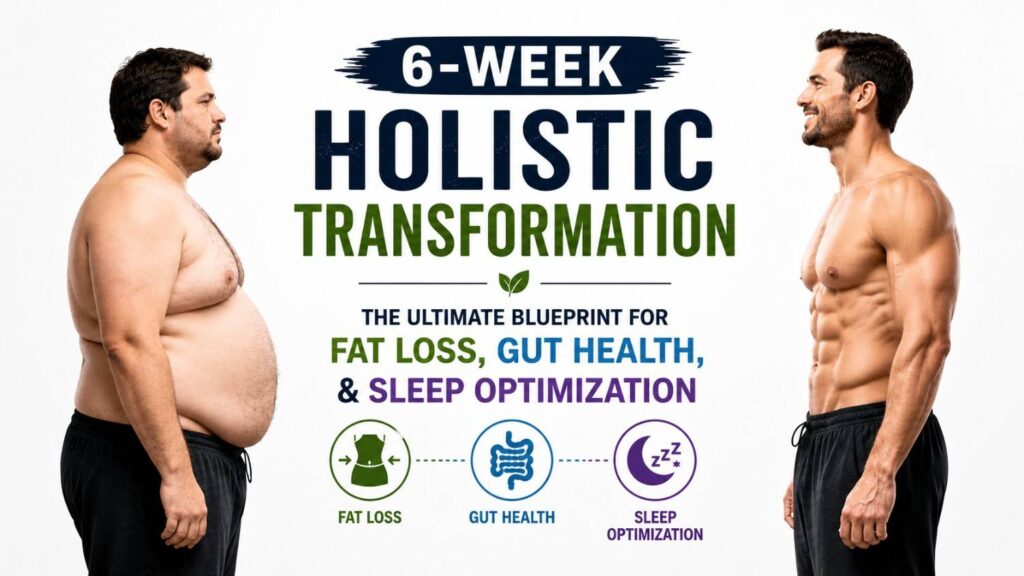
Welcome to Your 6-Week Reinvestment Blueprint
According to metabolic literature published in The American Journal of Clinical Nutrition, sustainable weight management is rarely achieved by simply cutting calories.
True biological optimization requires a unified approach that synchronizes macronutrient restriction, progressive physical resistance, gut microbiome integrity, and deep circadian rhythm (sleep) repair.
This page serves as your master control hub. Over the next 42 days, this blueprint will guide you day-by-day through a structured evolution. You will not just lose weight; you will systematically upgrade how your body stores energy, processes nutrients, and recovers overnight.
🎯 What is the Goal of This Program?
Our primary objective is to help you achieve metabolic flexibility—teaching your body to transition from burning sugar to burning stored body fat efficiently. By combining targeted ketogenic nutrition with structured home movement, systemic organ detoxification, and sleep hygiene, this program aims to:
Optimize your body composition by lowering visceral fat while preserving lean muscle tissues.
Rebalance gut microflora to eliminate bloating, systemic inflammation, and intense sugar cravings.
Reset your central nervous system for deeper, restorative slow-wave sleep.
🗺️ What You Need to Do (How to Navigate)
To ensure your success, treat this page as your interactive textbook.
Baseline Your Numbers: Before changing your diet, use our verified mathematical tools below to calculate your current biological baseline.
Follow the Timeline: Do not jump ahead. Human physiology adapts in phases. Move through the 6 weekly modules sequentially at the bottom of this page.
Document Your Changes: Track your waist-to-hip ratio, energy levels, and sleep quality weekly—not just the scale weight.

Before you begin Day 1, you must calculate your exact caloric and structural baselines. Input your metrics into our interactive tools below to remove the guesswork:
🌿 A Note From Our Health Research Desk
This blueprint is your essential guide for low-carb living. It gives you a complete, evidence-based roadmap.
You will learn to set clear goals and track your progress. We also include delicious recipes to boost your metabolism.
To help you succeed, we start with simple, practical strategies. This ensures a smooth transition into a high-energy, low-carb lifestyle.
Top Tips for Getting Started

1. Don’t Do It Alone
Changing your diet is tough. Doing it alone makes it harder. Studies show that people with social support stick to their goals much better.
A diet partner helps you share progress. You can swap quick tips and recipes. They keep you motivated during tough times.
Do not worry if your family is not ready. Online low-carb communities exist everywhere. They are filled with people ready to encourage you. There is true strength in numbers.
🌿 Free Natural Alternative: Share your 6-week goal with your household. This stops them from buying tempting snacks. You can also join a free online low-carb forum today.
🛒 Optional Tracking Tool: Human support is best. However, real-time data is a great digital partner. If you want to track your daily progress solo, the Fitbit Inspire 3 Health & Fitness Tracker can help. It tracks your steps, active heart rate, and sleep quality to keep you moving forward.

2. Be Clear With Your Goals
Setting goals is vital for success. Goals clarify why you are making changes. They show you exactly how to reach your destination on time.
Reaching a goal provides an immense sense of achievement. It builds healthy momentum. Once you hit one target, you naturally want to set the next one.
Set both short-term and long-term goals. A short-term goal could be walking for 30 minutes daily. A long-term goal could be balancing your metabolic blood markers.

3. Track Your Progress
Tracking your progress keeps you highly motivated. It allows you to break big goals into smaller, manageable steps.
Tracking also helps you spot obstacles early. Then you can make fast adjustments. Remember, progress is much more than just a number on the scale.
Track how you feel daily. Note down your energy levels and mood in a journal. You can also take regular progress photos or see how loose your favorite jeans feel.
🌿 Free Natural Alternative: Take weekly body measurements using a standard piece of string or tape measure. Track your waist, hips, thighs, and arms at home every Sunday morning.
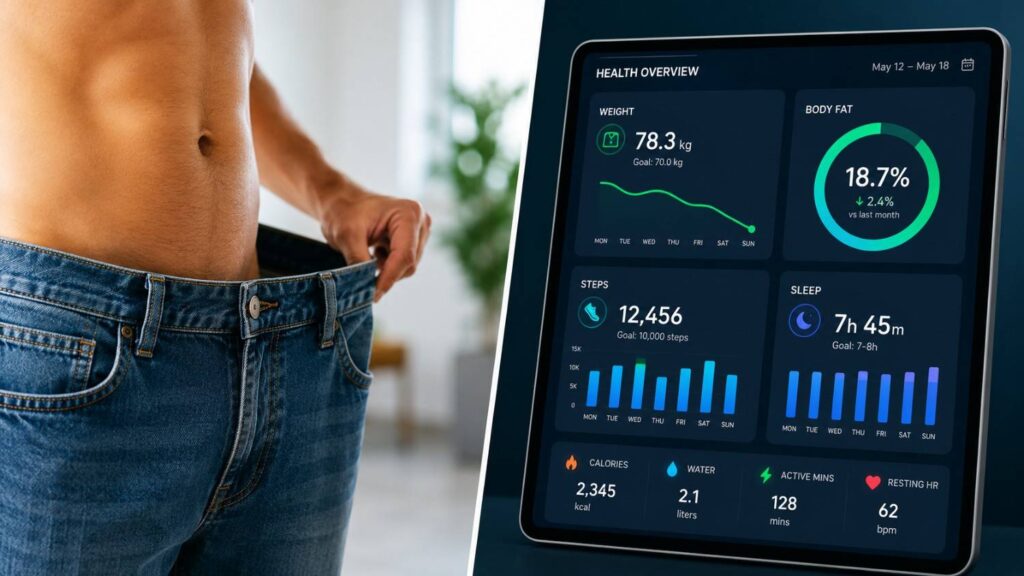
🛒 Optional Tracking Tools: If you want deeper, medical-grade insights into your metabolic health at home, consider these non-invasive tools:
For Body Composition: A standard scale only tells you total weight. A Smart Body Composition Scale breaks down your body fat percentage and muscle mass.
For Vital Signs: Keeping an eye on your cardiovascular strain is highly motivating. A home Blood Pressure Monitor allows you to watch your numbers improve as you shed body fat.
4. Check With Your Doctor
Check with your doctor if you take regular medication. Dietary changes directly affect your metabolism. This can alter how your body processes certain medications.
A sudden drop in carbohydrates can lower your blood pressure and blood sugar naturally. Because of this, your current medication dosages may need immediate adjustment by a medical professional.
5. Meal Prep & Low Carb Snack Supply
Planning your meals in advance is a massive secret to success. Cooking your low-carb food in bulk saves you hours of time and money every week.
Most importantly, meal prepping keeps you completely aligned with your goals. When you are tired after a long day, a pre-made meal stops you from ordering high-carb fast food.
Having clean snacks ready removes the temptation to graze on processed sugar. Use the easy meal plans and snack ideas included in this 6-week guide to get started.
🌿 Free Homemade Solution: Spend two hours every Sunday morning chopping fresh vegetables and grilling your proteins for the week ahead. Store them in airtight containers at eye level in your fridge so they are always the first thing you see.
🛒 The Safe Kitchen Alternative: Cooking in bulk means your food spends a lot of time touching your cookware. To avoid leaking toxic non-stick chemicals into your healthy 6-week meal prep, consider updating your kitchen tools:
For Safe Cooking: Traditional, ultra-durable Cast Iron: The Natural Powerhouse or heavy-duty Stainless Steel pans are free from toxic coatings. They ensure your meal-prepped proteins stay completely clean and non-toxic.
Where to Start: Understand the Basics
Low-carb diets limit foods rich in carbohydrates. This means cutting back on bread, pasta, sweets, and sugary sauces. You also avoid starchy root vegetables.
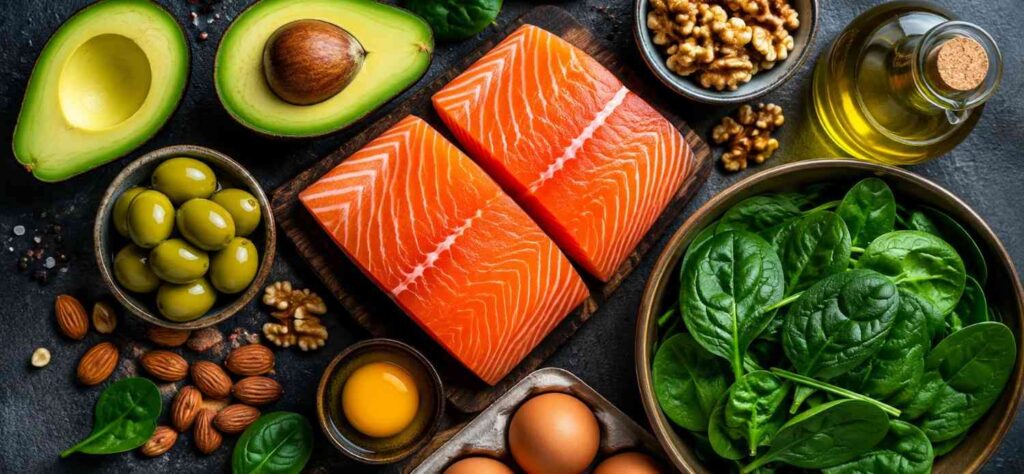
Instead, focus on healthy fats. This includes fatty meats, fresh fish, healthy oils, nuts, and full-fat dairy. You will also eat plenty of fibrous leafy greens and low-sugar fruits like berries.
To put it simply: cut out the heavily processed junk. Choose real, high-quality whole foods instead.
📋 The Golden Rules of Low-Carb Nutrition
Eat full-fat, natural food sources.
Fill your plate with fibrous green vegetables.
Consume a moderate amount of protein.
Completely eliminate processed foods, added sugars, and grains.
📊 Know Your Numbers: The Three Levels
Different people have different definitions of a low-carb diet. Choose the baseline level that fits your comfort zone:
Moderate Low Carb: Consuming 130g to 225g of net carbohydrates daily.
Standard Low Carb: Consuming under 130g of net carbohydrates daily.
The Ketogenic Diet (Very Low Carb): Consuming strictly under 20g to 30g of net carbohydrates daily.
Generally, the lower your carbohydrate intake, the faster your body burns fat. However, a strict ketogenic limit can feel extreme if you are a complete beginner. If you are new, start with standard low-carb, then transition to strict keto over time.
🌿 Free Natural Strategy
Do not guess your portions when starting out. Take a standard dinner plate and visually divide it: fill half the plate with leafy green vegetables, one-quarter with clean proteins, and the final quarter with healthy, natural fats.
🧮 Calculate Your Limits Instantly: To find your exact personalized carbohydrate and protein thresholds based on your height and weight, use our custom digital tools before planning your meals:
🛒 Optional Tracking Alternative: Tracking exact carbohydrate grams on your phone can feel like guesswork. If you want an objective tool to ensure your meal portions perfectly align with the 20-30g strict keto rule, consider this helpful tool:
For Absolute Accuracy: A compact Smart Body Composition Scale at home can help you monitor your fat-to-muscle ratio weekly. This ensures that as you restrict carbs down to the ketogenic level, you are losing pure body fat rather than lean muscle tissue.
Health Markers: The Power of Low Carb
Carbohydrates are broken down into glucose. This causes a rise in blood sugar and insulin levels. Reducing carbs and increasing healthy fats reverses this cycle seamlessly.
When you lower your carbohydrates, you unlock several common health benefits:
Decreased circulating insulin levels.
Improved, steady blood sugar control.
More consistent daily physical energy.
Sharper mental focus and cognitive clarity.
Sustainable weight loss and reduced visceral fat.
Eating more healthy fats increases your satiety. This naturally reduces your overall appetite. Because lower insulin limits fat storage, your body comfortably shifts into fat loss.
📏 Beyond BMI: The Waist-to-Hip Ratio (WHR)
Many people use Body Mass Index (BMI) to monitor their health. However, BMI has limitations. It fails to separate body fat from dense muscle, bone mass, age, or gender. This means a highly fit person with large muscle mass can be wrongly categorized as obese. Conversely, someone can have a “healthy” BMI but still carry dangerous fat around their stomach.
To get an accurate picture of your metabolic health, focus on your Waist-to-Hip Ratio (WHR) instead.
While WHR does not measure exact fat percentages, it highlights whether you carry excessive visceral fat. Visceral fat surrounds your deep abdomen and internal organs. It is considered the most dangerous type of body fat. WHR is widely regarded as a superior indicator of metabolic wellness because it looks precisely at where your body fat is stored.
🌿 Free Natural Tracking Method
Grab a standard, flexible measuring tape every Sunday morning before eating. Measure the narrowest part of your waist (usually right above the belly button). Then, measure the widest part of your hips. Divide your waist measurement by your hip measurement to find your current WHR ratio.
🧮 Compare Your Metrics Instantly: Use our suite of digital calculators to compare your standard BMI against your personalized health targets. This gives you a complete, balanced look at your body layout:

How to Measure Your Waist-to-Hip Ratio (WHR)
Tracking your waist-to-hip ratio (WHR) and taking regular progress photos are excellent ways to see real changes. Scale weight doesn’t tell the whole story. These visual methods show exactly how you are losing body fat.
Follow these simple steps for accuracy:
Measure Your Waist: Use a flexible measuring tape. Place it 1 inch above your belly button. For accuracy, do this with minimal clothing.
Measure Your Hips: Wrap the measuring tape around the widest, largest area of your hips.
Calculate the Ratio: Divide your total waist measurement by your total hip measurement.
Take Progress Photos: We highly recommend doing this weekly. Wear minimal clothing, such as underwear, to see clear changes.
Capture Multiple Angles: Take a photo from the front of your body first. Then take photos from the left side, right side, and if possible, from behind.
📸 Mastering the Progress Selfie
Taking weekly progress photos is one of your most powerful motivation tools. Often, daily changes are too small to notice in the mirror. You might feel you aren’t making progress until you look back and compare your older photos side-by-side.
For the best visual accuracy, keep these mobile-friendly tips in mind:
Maintain Weekly Continuity: Wear the exact same underlying clothing or activewear every single week. This ensures your body’s visual tracking stays completely consistent.
The Mirror Setup: If you don’t have a trusted person to take the photos, stand in front of a clear, full-length home mirror. Hold your phone steady at chest level.
Push Past the Embarrassment: It is completely normal to feel a little bit silly or embarrassed during your first week. Remind yourself that these photos are for your eyes only. Being able to reflect on your hard work later is incredibly rewarding.
Create Your Low Carb Shopping List
Starting a low-carb lifestyle can feel like a minefield. Knowing exactly what to buy is tough at first. To remove the guesswork, use this structured guide to build your personal shopping list.
Everyone has different tastes and food preferences. Simply select the healthy, whole foods you enjoy most from the categories below. You can also check online low-carb communities for fresh meal inspiration.
💰 Smart Ways to Stay on Budget
Eating healthy does not have to be expensive. If budget is an issue, use these highly effective strategies to keep your grocery bill low:
Go Frozen: Buy frozen meats, fish, vegetables, and berries in bulk. They last longer and cost much less than fresh items.
Utilize Canned Foods: Opt for nutrient-dense canned fatty fish like sardines, salmon, and mackerel. Canned clean meats are also affordable and highly convenient.
Buy Whole: Buying whole blocks of cheese or untrimmed meats is always cheaper than buying pre-shredded or pre-cut options
Your Ultimate Low Carb Shopping List
Pick the whole foods you love most from each category to build your personalized meal plan.
🥩 1. Clean Proteins (Meat & Poultry)
Chicken (thighs, legs, drumsticks, or whole roasts)
20% Fat Minced Meat (Beef, Lamb, or Pork)
Steaks (Sirloin or Lamb)
Pork Belly & Bacon
Dry Cured Meats (Salami, Chorizo, Parma Ham, Deli Ham)
Sausages & Corned Beef
🐟 2. Fish & Seafood
Fresh Fish (Salmon, Trout, Seabass)
Canned or Smoked Fish (Smoked Salmon, Mackerel, Sardines, Kippers, Anchovies)
Shellfish (Prawns)
🧀 3. Healthy Dairy & Eggs
Fresh Eggs (A low-carb staple)
Full-Fat Cheese (Cheddar, Parmesan, Feta, Brie, Goat’s Cheese, Cream Cheese)
Whole Milk & Heavy Cream
Butter, Sour Cream, and Unsweetened Greek Yogurt
📸 [IMAGE PLACEHOLDER: A minimalist close-up shot of farm-fresh eggs, a block of yellow cheddar cheese, and a fresh piece of salmon sitting on a clean marble countertop.]
🥦 4. Low-Carb Vegetables
Leafy Greens: Lettuce, Spinach, Kale
Green Veggies: Broccoli, Cucumber, Celery, Asparagus, Green Beans, Cabbage, Courgette, Leeks
Flavor & Texture: Spring Onions, Aubergine, Peppers, Celeriac, Cauliflower
🍓 5. Low-Sugar Fruits
Avocados (High in healthy fats)
Fresh or Frozen Berries: Blueberries, Blackberries, Raspberries, Strawberries
Melons: Cantaloupe, Honeydew Melon, Watermelon
Zest & Flavor: Passionfruit, Lemons, Limes
🌶️ 6. Herbs & Spices
Keep your meals delicious and flavorful without adding processed sugary sauces:
Garlic & Ginger
Coriander & Parsley
Rosemary, Thyme, and Oregano
Fresh Chillies & Ground Paprika
🥜 7. Pantry Staples & Snacks
Cooking Oils: Extra Virgin Olive Oil, Coconut Oil, Coconut Cream
Healthy Fats: Real Mayonnaise, Whole Olives
Nuts & Seeds: Almonds, Walnuts, Pecans, Pine Nuts, Brazil Nuts, Macadamia Nuts
Seed Mixes: Pumpkin Seeds, Sunflower Seeds, Flaxseed
Sweet Treat: Plain Dark Chocolate (70% cocoa or higher)