
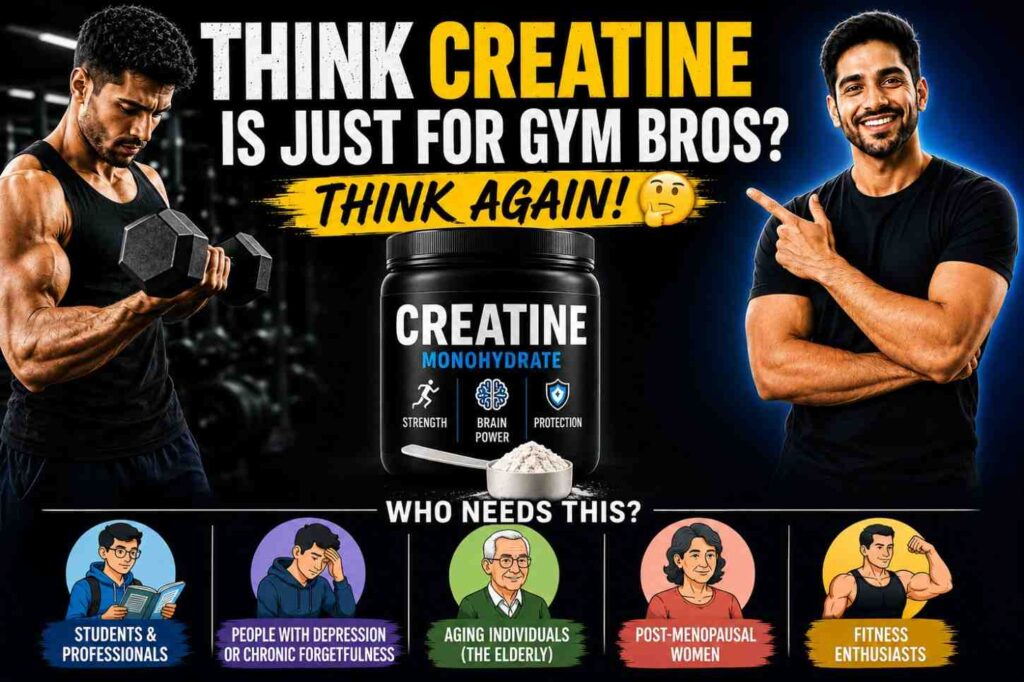
Why Everyone Should Take Creatine Daily (Even Non-Athletes)
When most people hear the word creatine monohydrate, they immediately picture bodybuilders lifting massive weights at the gym. “That’s a gym supplement,” you might think. “Why should an average, everyday person care?” It is time to hit the pause button. While it is highly hyped in the fitness world, creatine monohydrate is actually a powerful wellness tool for everyone. Whether you want to boost your physical stamina or protect your brain health, daily use of creatine monohydrate can completely transform your routine.
What Exactly is Creatine Monohydrate?
Let’s skip the overwhelming scientific jargon and keep it simple. Creatine is an amino acid derivative naturally produced in our kidneys and liver using three basic building blocks: arginine, glycine, and methionine.
If you regularly eat fish or beef, you already get about 1 gram of creatine daily from your diet. However, to unlock its full physical and therapeutic benefits, supplementing with a pure form is highly effective.
How Creatine Monohydrate Works in Our Muscles
Think of Adenosine Triphosphate (ATP) as the primary cellular currency or fuel source for our body. Initially, during activity, it loses energy and becomes ADP (adenosine diphosphate).
Creatine steps in like a backup battery, donating a phosphate molecule to convert ADP right back into energetic ATP. By boosting this cellular energy cycle, creatine makes your muscles feel stronger and more resilient, allowing you to breeze through heavy daily chores or squeeze out an extra repetition or two during your workouts.
Your Brain on Creatine Monohydrate: The Mental Health Connection
While it does wonders for physical stamina, its impact on the mind is arguably even more revolutionary.
Your brain consumes a massive 20% of your body’s total energy. Creatine has the unique ability to smoothly cross the blood-brain barrier. Multiple randomized controlled trials (RCTs) and meta-analyses show that when our brains are sleep-deprived, foggy, or mentally exhausted, creatine acts as a cognitive rescue shield.
- Beats Brain Fog: It restores your ability to think clearly when you are running on low sleep or experiencing cognitive fatigue.
- Supports Mental Health: Emerging studies show it can significantly aid in reducing depressive symptoms by optimizing brain energy metabolism.
- Boosts Memory: It reduces everyday forgetfulness and enhances processing speed.
- Neuroprotection: Groundbreaking research suggests it offers incredible baseline support for neurodegenerative conditions like Alzheimer’s and Parkinson’s disease.
Is Creatine Monohydrate Safe and Effective for Women?
Absolutely. Research specifically targeting female physiology has shown remarkable breakthroughs, particularly regarding aging and hormonal shifts:
- Post-Menopausal Bone Health: It helps combat the loss of bone density. Studies show excellent results in protecting aging structural joints and knees when paired with light movement.
- Combats Hormonal Fatigue: It helps women overcome the physical fatigue and low energy levels often experienced during pre-menstrual or pre-menopausal phases.
- The Hair Loss Myth: Many women hesitate to try creatine due to a widespread myth about hair thinning. A 12-week randomized controlled trial showed no direct link between creatine intake and hair fall. If it makes you personally uncomfortable, you can always choose to skip it, but medically speaking, the data is entirely on your side.
Debunking the Biggest Myths About Creatine Monohydrate
| The Common Fear | The Scientific Reality |
| “Creatine will destroy my kidneys!” | False. Doctors monitor kidney health using a biomarker called creatinine. Taking creatine might cause a slight, harmless bump in your blood work. This is a technical artifact—not a sign of kidney distress or structural damage. |
| “I gained 2 kg instantly. Am I getting fat?” | False. You did not gain fat, nor are you bloated with gas. Creatine functions by pulling water directly into your muscle cells to synthesize protein. This is intracellular hydration, which keeps muscles looking healthy and performing optimally. |
How, When, and How Much to Take?
The science behind creatine isn’t a brief health trend; it has been rigorously studied for decades with incredibly safe, robust results.
- What to Buy: Stick to pure Creatine Monohydrate. It is the most thoroughly researched, safest, and most budget-friendly form available. Avoid overpriced, fancy variations with unnecessary additives.
- The Best Quality Choice: To skip the guesswork, you can find our top recommended, high-purity, and third-party tested brand directly on Amazon here.
- Dosage: Mix 3 to 5 grams daily in a glass of water. Most tubs come with a small scoop inside for exact measurement.
- Timing: You can take it at any time of the day that fits your schedule—consistency matters much more than perfect timing.
- Hydration: You do not need to drink excessive amounts of water. Simply listen to your body and monitor your urine color. A healthy, light straw-yellow color means you are perfectly hydrated. ( Determine exactly how much water you need daily based on your body, activity level, and environment.)
Frequently Asked Questions (FAQs)
1. Do I need to “load” creatine when I start?
No. While some fitness guides suggest a “loading phase” (taking 20 grams a day for a week), it is entirely unnecessary. Taking a standard 3 to 5 grams daily will safely saturate your muscles over 3 to 4 weeks without causing any potential stomach upset.
2. Can I take creatine if I don’t work out at all?
Yes! While it maximizes workout performance, non-athletes can take it purely for its cognitive benefits, mental clarity, memory support, and cellular energy production.
3. Should I stop taking creatine after a few months?
There is no medical need to cycle off creatine. Long-term studies have shown that continuous daily usage is completely safe for healthy individuals.
4. What happens if I stop taking it?
If you stop taking it, your body’s creatine levels will simply return to their baseline within a few weeks. You might notice a slight drop in muscle fullness or intense workout endurance, but there are no adverse side effects.
Disclaimer: While creatine is one of the most thoroughly researched supplements in the world, it is always a good practice to consult with your healthcare provider before introducing any new supplement into your daily regimen, especially if you have pre-existing medical conditions.